
Choosing a Roller Conveyor Supplier in 2026 requires more than comparing prices, photos, or catalog capacity. Global buyers need equipment that matches product weight, package dimensions, warehouse temperature, and daily handling volume. A quiet steel roller turning under a carton may look simple, but its bearings, frame strength, spacing, and drive system decide long-term performance. Small details matter.
Material-handling consultant Michael R. Ostwald offers a practical reminder: “A conveyor earns its value through dependable movement, not impressive specifications.” That principle guides this review of the 2026 Top Roller Conveyor Suppliers for Global Buyers. The selected companies are considered through manufacturing experience, engineering support, product customization, quality control, delivery capability, and after-sales service. Documentation also matters. Reliable suppliers should provide load ratings, installation guidance, maintenance instructions, and clear warranty terms.
No supplier wins every project. A gravity roller conveyor may suit lightweight cartons, while powered rollers perform better in continuous distribution operations. Stainless steel can be sensible in humid areas, but it may add unnecessary cost in a dry warehouse. Buyers should challenge attractive claims and request application-specific evidence. That step is often missed.
This guide does not treat a long supplier list as proof of quality. Instead, it examines practical fit, operating risks, and measurable value. Lead times can change. Components can vary. Even strong suppliers need careful verification. With the right questions, global buyers can reduce delays, improve material flow, and select a Roller Conveyor Supplier capable of supporting safe, dependable operations.
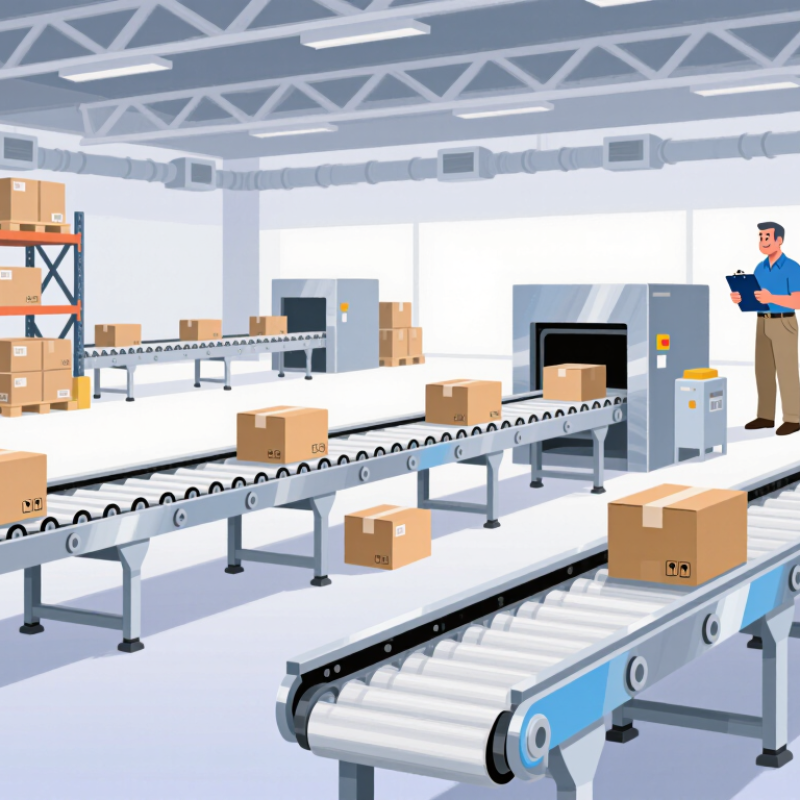
Roller conveyors are material-handling systems built to move cartons, totes, pallets, and other stable loads. Each roller supports part of the product’s weight. As one roller turns, it transfers motion to the next contact point. Gravity models use a slight slope, while powered models use motors, chains, or belts. The load then travels through a controlled path. Simple in principle.
The roller surface, spacing, frame strength, and drive method determine performance. Heavy pallets need stronger rollers and closer spacing. Small cartons may require narrow gaps to prevent tipping. In warehouse testing, poor alignment often creates rubbing, noise, and unexpected stoppages. That detail is easy to overlook. Global buyers should request load ratings, speed ranges, material specifications, and maintenance instructions from suppliers. Clear technical documents improve purchasing decisions and reduce installation errors.
Tips: Measure the heaviest load first. Check its bottom shape. Keep rollers clean and aligned. Test emergency stops before daily operation. A short trial with real cartons can reveal problems that drawings miss. Do not assume a faster conveyor is better; unstable loads may require slower movement.
| Data Dimension | Verified Industry Information | Why It Matters to Global Buyers |
|---|---|---|
| What a roller conveyor is | A material-handling conveyor made from a series of parallel rollers mounted in a frame. Products move on the roller surfaces along a defined path. | It is suitable for unit loads with a relatively firm, flat underside, such as cartons, totes, pallets, drums, and trays. |
| How gravity roller conveyors work | The load moves because of a slight conveyor incline, manual pushing, or gravity-assisted accumulation. Rollers rotate beneath the load as it travels. | They generally require less equipment and energy than powered systems, making them practical for loading, unloading, staging, and short-distance transfers. |
| How powered roller conveyors work | An electric motor drives rollers directly or through chains, belts, shafts, or motorized rollers. The drive system provides controlled movement and may support accumulation. | Powered systems are better for longer lines, consistent throughput, controlled spacing, inclines, declines, and automated material-flow operations. |
| Common conveyor categories | Gravity roller, powered roller, chain-driven roller, line-shaft roller, belt-driven roller, flexible roller, accumulation roller, and pallet roller conveyors. | The correct category depends on load weight, product dimensions, required speed, accumulation needs, layout, and operating environment. |
| Typical roller diameter | Common industrial roller diameters include approximately 25 mm, 38 mm, 50 mm, 60 mm, 76 mm, and 89 mm. The appropriate size depends on load and conveyor duty. | Larger rollers generally provide greater load capacity and durability, while smaller rollers can suit lighter products and tighter transfer spacing. |
| Roller spacing | Roller pitch must allow the smallest load to be supported by multiple rollers at the same time. A common design rule is to keep at least three rollers under the load. | Correct spacing reduces rocking, tipping, product damage, and unstable transfers. |
| Typical frame materials | Carbon steel is widely used for general industrial applications. Stainless steel is selected for corrosion resistance and hygiene-sensitive environments. Aluminum is used where low weight and modularity are priorities. | Material selection affects service life, cleanability, total weight, corrosion resistance, and purchase cost. |
| Typical load range | Light-duty roller conveyors may handle parcels and cartons weighing a few kilograms. Heavy-duty pallet systems can be engineered for loads of several hundred kilograms or more per load, depending on design. | Buyers should confirm the maximum load per roller, maximum load per linear meter, and safety factor rather than relying only on a general conveyor category. |
| Load bottom condition | Flat, rigid, and stable bottoms work best. Loads with flexible packaging, uneven bases, loose items, or protruding parts may require a belt conveyor, special rollers, guides, or a carrier. | Bottom condition directly affects tracking, rolling resistance, transfer reliability, and product safety. |
| Speed considerations | Gravity conveyors operate according to slope, load characteristics, and manual handling. Powered roller speed is selected according to product type, throughput, accumulation method, and safety requirements. | Excessive speed can cause product impact, noise, poor spacing, and unsafe transfers. |
| Accumulation capability | Accumulation may be zero-pressure, minimum-pressure, or controlled-pressure. Powered zones, sensors, and control logic are commonly used to regulate product spacing. | The accumulation method helps prevent collisions, package damage, and unplanned line stoppages. |
| Layout options | Straight sections, curves, transfers, merges, diverters, inclines, declines, telescopic sections, and flexible sections can be combined into a material-flow layout. | A supplier should review the complete flow path rather than quote isolated conveyor sections without checking transfers and clearances. |
| Typical applications | Warehousing, distribution, manufacturing, packaging, order fulfillment, pallet handling, parcel handling, airport logistics, and assembly operations. | Application conditions determine the required conveyor type, controls, guarding, sanitation level, and maintenance plan. |
| Supplier engineering capability | A qualified supplier should be able to provide load calculations, roller and frame selection, drive sizing, layout drawings, safety features, installation guidance, and commissioning support. | Engineering support reduces the risk of under-capacity equipment, unsuitable transfers, and costly redesigns. |
| Safety features to request | Emergency-stop devices, pinch-point protection, side guards, load backstops, protective covers, safe access points, warning labels, and appropriate electrical protection should be considered. | Safety requirements vary by application and jurisdiction, so buyers should request documentation aligned with the installation location. |
| Maintenance requirements | Routine checks may include roller condition, bearings, drive components, chain or belt tension, fasteners, sensors, guards, alignment, and debris removal. | A supplier offering spare-parts lists, maintenance instructions, and service support can reduce downtime over the equipment life cycle. |
| Global purchasing documents | International buyers commonly request technical drawings, bills of materials, electrical diagrams, packing specifications, manuals, inspection records, warranty terms, and shipping dimensions. | Complete documentation supports customs clearance, installation, local compliance review, spare-parts planning, and future expansion. |
| Key quotation inputs | Load type, minimum and maximum dimensions, load weight, throughput, conveyor length and width, elevation changes, operating hours, environment, power supply, controls, and required delivery scope. | Providing these details allows suppliers to prepare comparable and technically accurate quotations. |