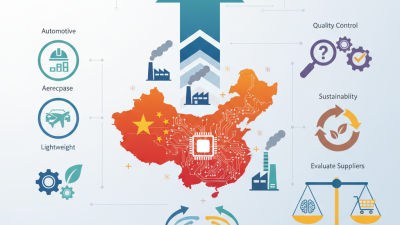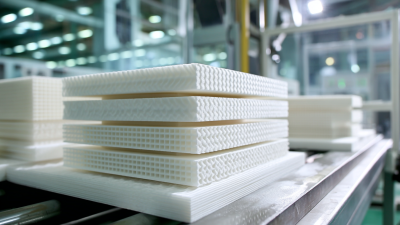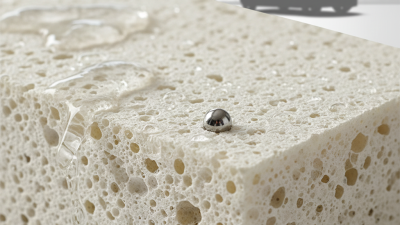
7 Best Structural Foam Materials for Global Buyers

Choosing the right structural foam can influence weight, stiffness, durability, and total project cost. Global buyers often compare materials across marine panels, wind turbine blades, transport interiors, and industrial enclosures. The strongest option on paper may fail when moisture, heat, bonding, or transport conditions change.

This guide examines seven widely used structural foam materials, including PVC, PET, SAN, PMI, polyurethane, EPS, and XPS. Each material offers a different balance of density, compressive strength, cell structure, temperature resistance, and price. Some perform well with epoxy or polyester resins. Others need careful surface preparation before bonding. Details matter.

Real purchasing decisions require more than a datasheet. Buyers should review core density, thickness tolerance, water absorption, shear properties, fire performance, and processing temperature. Certification also deserves close attention. Regional standards and project specifications may differ, even when the product names appear identical. Ask for current test reports, batch information, and sample panels before approving volume orders.

Cost is not always the lowest invoice value. Cutting waste, storage space, freight weight, and repair risk can change the final calculation. A cheaper foam may demand thicker laminates or more careful handling. That can erase the initial saving. This comparison is practical, but not absolute. Material performance depends on design, resin choice, manufacturing control, and service conditions. Treat every recommendation as a starting point, then validate it through supplier documentation and application testing. Even experienced teams can miss one variable. A careful review prevents expensive surprises.
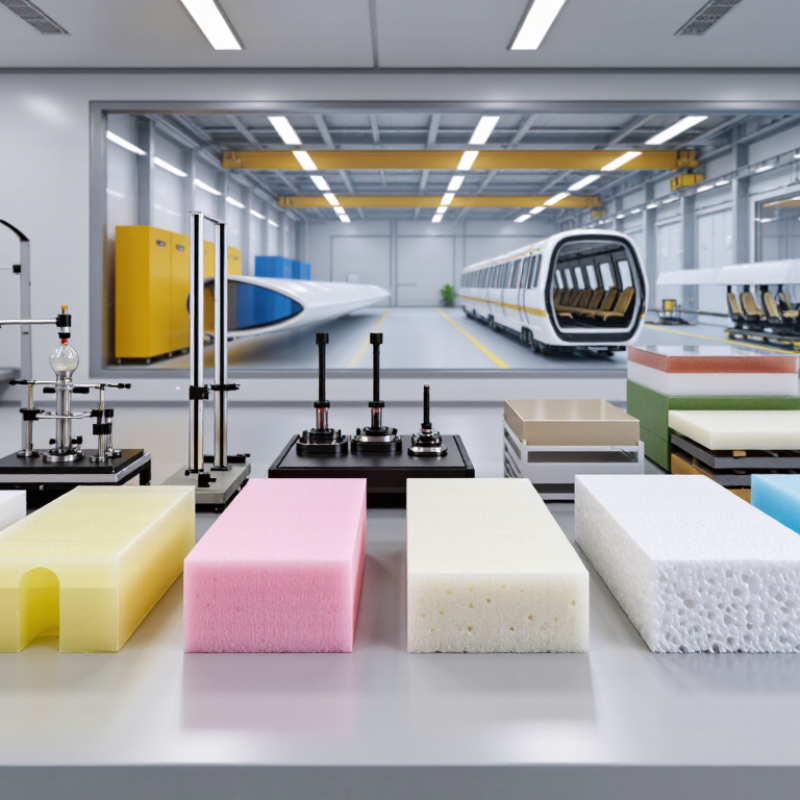
7 Best Structural Foam Materials for Global Buyers

What Structural Foam Is and Why It Matters to Global Buyers

Structural foam is a lightweight polymer core with many small, closed or open cells. It sits between stronger skins in panels, doors, vehicle parts, boats, and industrial enclosures. The core increases bending stiffness without adding solid plastic weight. A 20-millimeter panel can feel rigid while remaining manageable during installation.

The seven common material families are PVC, PET, PUR, PEI, PMI, PP, and SAN foam. Each behaves differently. PVC often balances cost, strength, and moisture resistance. PET supports recycled-content goals and stable thermal performance.

PUR offers useful insulation, while PEI and PMI suit demanding temperature or aerospace-related applications. PP resists chemicals and moisture. SAN can provide good stiffness at competitive density. These descriptions are only starting points. Actual results depend on density, cell structure, skin bonding, and processing temperature.

Global buyers should compare compressive strength, shear strength, water absorption, fire behavior, and service temperature. Request recent test reports, batch traceability, tolerance data, and samples from the same production route. A low price may hide higher resin variation or difficult bonding.

Freight planning matters too; bulky foam can consume container space before it reaches the factory. One detail is easy to miss. A material rated well in a laboratory may perform poorly after cutting, heating, or prolonged humidity exposure.

Supplier documentation needs careful review, and buyer assumptions need challenging.

Core Properties Used to Evaluate Structural Foam Materials

7 Best Structural Foam Materials for Global Buyers

Core Properties Used to Evaluate Structural Foam Materials

Selecting structural foam requires more than comparing density or price. Engineers usually examine compressive strength, shear strength, stiffness, and fatigue resistance under real service loads. A lightweight core may look efficient, yet it can crush around bolts or curved panels.

Common candidates include PVC, PET, PMI, SAN, polypropylene, polyurethane, and phenolic foam. Their performance varies with cell structure, density, processing, and temperature. Compressive strength matters beneath skins, while shear strength protects panels from sliding failure. Test both directions.

Very small differences matter.

Water absorption also deserves careful attention. A foam exposed to rain, humidity, or repeated washing may gain weight and lose insulation value. Closed-cell construction helps, but it does not guarantee complete moisture resistance. Buyers should request long-term data, not only short laboratory results.

Thermal conductivity affects energy performance, especially in refrigerated equipment and building panels. Service temperature, fire behavior, dimensional stability, and resin compatibility also influence the final choice. A core that bonds well in flat panels may perform poorly after heating or machining. We have seen published figures differ from finished-part results. That gap needs investigation.

Manufacturers should compare density against strength efficiency, not strength alone. They should also review tolerances, available thicknesses, cutting quality, recyclability, and regional supply reliability. Some materials machine cleanly; others shed dust or deform near fast-moving tools. Practical testing remains essential. Perfect data is uncommon.

7 Best Structural Foam Materials for Global Buyers

Representative mid-range values commonly used to compare structural foam materials. Density and compressive strength vary by grade, processing method, and test standard.

How to read the chart: Lower density supports lightweight design, while higher compressive strength improves load-bearing performance. PVC, PET, PMI, and phenolic foams generally provide higher structural performance than EPS and XPS, whereas PU/PIR is widely selected when thermal insulation is also important.

Seven Leading Structural Foam Materials and Their Best Applications

7 Best Structural Foam Materials for Global Buyers

Seven Leading Structural Foam Materials and Their Best Applications

Structural foam selection depends on load, temperature, moisture, and production method. PVC foam is a practical core for marine decks, wind blades, and sandwich panels. It offers balanced strength, low water absorption, and simple processing. PET foam suits wind turbine blades, vehicle panels, and transport structures. Its recycled-content potential attracts buyers seeking lower-impact sourcing.

SAN foam performs well in marine hulls and large composite blades. It provides good fatigue resistance and tolerates demanding bonding processes. PMI foam delivers excellent stiffness at low weight. Aerospace panels, high-speed vehicles, and satellite structures often use it. PEI foam is valuable where heat resistance and fire performance matter, including aircraft interiors and rail components. It costs more. Sometimes, that is the real limitation.

Polyurethane structural foam fits insulated panels, interior modules, and lightweight doors. It is economical and easy to shape, but its mechanical performance varies widely by density. Epoxy syntactic foam supports buoyancy modules, underwater housings, and pressure-sensitive structures. It resists water ingress when properly formulated and sealed. Yet no material wins every project. Buyers should request density, cell structure, compressive strength, shear data, and thermal limits. A small sample test can reveal bonding problems that a technical datasheet misses. Regional standards and shipping temperatures also deserve attention. A perfect material on paper may fail during cutting, storage, or final assembly.

How to Compare Structural Foam Costs, Supply, and Compliance

Choosing among the seven leading structural foams—PVC, PET, PUR, PP, PEI, SAN, and PMI—requires more than comparing price per kilogram. A 2024 MarketsandMarkets report estimated continued growth in the structural foam market, driven by lightweight transport and wind-energy components. However, resin prices, density, tooling, and scrap rates can change the final cost. PET often offers attractive recycled-content options, while PMI and PEI command higher prices for demanding thermal applications. The cheapest quotation may become the most expensive mistake.

Supply reliability deserves equal attention. Check regional production, minimum order quantities, lead times, and batch consistency. PlasticsEurope reported global plastics production at about 400 million tonnes in 2022, but structural-grade foam availability remains much narrower. Ask suppliers for density tolerance, cell-size data, compression strength, and aging results. Compliance also needs evidence. Request REACH and RoHS declarations, safety data sheets, and recycled-content documentation where applicable. Documents matter more than confident promises.

Tips: Build a landed-cost table before approval. Include freight, protective packaging, testing, and rejected parts. Compare materials at equal performance, not equal weight. Review at least three supply regions. I would also test a small production batch, because laboratory data can hide processing problems. Supplier declarations are useful, but independent verification is safer. A minor density variation may affect bonding, machining, and certification results. That detail is easy to overlook.

7 Best Structural Foam Materials for Global Buyers - How to Compare Structural Foam Costs, Supply, and Compliance

Material Typical Density
(kg/m³)
Indicative Core Cost
(USD/m² at 20 mm)
Typical Compressive Strength
(MPa)
Continuous Service Temperature
(Approx.)
Global Supply Outlook Processing and Bonding Typical Compliance Considerations Best-Fit Applications
PVC Closed-Cell Foam 60–250 $8–25 0.8–5.0 Approx. 70–85°C High
Widely available in sheet, block, and contour-cut formats.
Easy to machine and laminate. Compatible with many epoxy, polyester, and vinyl ester systems; adhesive compatibility should be tested. Check REACH, RoHS, flame-smoke-toxicity requirements, plasticizer content, and halogen restrictions for transport projects. Marine panels, wind-turbine components, vehicle structures, industrial covers, and general sandwich panels.
PET Recycled Foam 60–250 $7–22 0.7–4.0 Approx. 80–120°C High and expanding
Strong availability in composite and transport supply chains.
Thermoplastic; can be thermoformed and machined. Requires suitable resin or adhesive selection and controlled lamination temperature. Often supports recycled-content claims. Verify recycled-content percentage, REACH, RoHS, VOC, fire classification, and end-of-life documentation. Wind-energy blades, rail interiors, electric-vehicle structures, marine panels, and sustainability-focused construction.
SAN Foam 60–200 $10–30 0.8–4.0 Approx. 80–100°C Medium to high
Established but less broadly stocked than PVC and PET.
Good dimensional stability and fatigue resistance. Generally compatible with common thermoset laminating resins after surface preparation. Confirm REACH and RoHS status, styrene-related emissions data, fire performance, and any transport-sector smoke requirements. High-fatigue composite panels, marine structures, wind components, and applications requiring good dimensional stability.
PP Structural Foam 45–250 $6–20 0.5–4.5 Approx. 90–110°C High
Large polymer supply base and broad processing capability.
Low surface energy makes bonding more demanding; flame, plasma, corona, or specialized primers may be required. Good impact resistance. Commonly favorable for recyclability and low density. Verify REACH, RoHS, fire rating, automotive chemical restrictions, and recycled-content claims. Automotive interiors, reusable packaging, impact-resistant panels, flotation structures, and lightweight transport components.
PMI Foam 30–200 $35–120 0.5–8.0 Approx. 150–180°C Medium to limited
Specialty material with longer lead times and fewer qualified sources.
Excellent for high-temperature processing and precision machining. Suitable for demanding prepreg and resin-infusion systems when specified correctly. Requires aerospace or medical documentation where applicable; verify REACH, RoHS, outgassing, flammability, traceability, and lot certification. Aerospace interiors, high-performance sporting goods, satellite structures, medical equipment, and high-temperature composite parts.
PU Rigid Foam 35–200 $5–18 0.2–3.0 Approx. 70–100°C High
Broad insulation and composite-panel manufacturing base.
Easy to cut, shape, and bond. Some grades are sensitive to solvents, moisture, elevated heat, and exothermic resin systems. Review blowing-agent declarations, fire and smoke classification, VOC emissions, REACH, RoHS, building-code requirements, and insulation regulations. Insulated panels, prototypes, architectural forms, low-load sandwich structures, and thermal-management components.
Phenolic Foam 35–150 $10–35 0.2–2.5 Approx. 100–150°C Medium
More common in insulation markets than in high-performance composite cores.
Good thermal insulation and low flame spread. Brittle compared with many thermoplastic cores; careful machining and facing are recommended. Fire, smoke, and toxicity testing is critical. Verify formaldehyde/VOC emissions, REACH, RoHS, building standards, and project-specific fire codes. Fire-sensitive building panels, ducting, HVAC insulation, rail and marine interiors, and thermal-insulation systems.
Buyer’s note: Cost ranges are indicative planning values for a 20 mm finished foam-core area and can vary substantially with density, thickness, facing, tolerances, machining, order quantity, freight, energy prices, and region. Confirm the exact grade, technical data sheet, safety data sheet, certificate of analysis, fire test report, and regulatory declarations before purchase.

How Global Buyers Can Select and Source the Right Structural Foam

Global buyers face seven common structural foam choices: EPS, EPP, XPS, polyurethane, PVC, PET, and phenolic foam. Each material behaves differently under load, heat, moisture, and impact. The cheapest sheet may fail when exposed to wet storage or repeated compression. Start with the application, not the supplier’s product name.

Define the required density, compressive strength, shear strength, water absorption, and operating temperature. For sandwich panels, check core thickness and bonding compatibility with the facing material. Ask for test data under recognized ISO, ASTM, or EN methods. Test conditions matter. A strength value without temperature or density data is incomplete.

Request samples, dimensional tolerances, safety documentation, and recent batch records before placing a large order.

Global sourcing also requires practical checks. Confirm packaging, pallet dimensions, export documents, production capacity, and realistic lead times. A low factory price can disappear through oversized freight or moisture damage. Compare total landed cost instead. Suppliers may describe similar grades differently, so build a simple comparison table with identical criteria. This step is boring but useful. Do not trust polished data blindly. Some specifications need independent verification. A small trial order can reveal cutting dust, uneven cells, weak bonding, or unexpected odor. I would also review the material after transport, because laboratory performance may not reflect a long, humid journey. Mistakes happen. The purchasing process should leave room to question early assumptions.

We will help turn your vision into reality

Contact Us