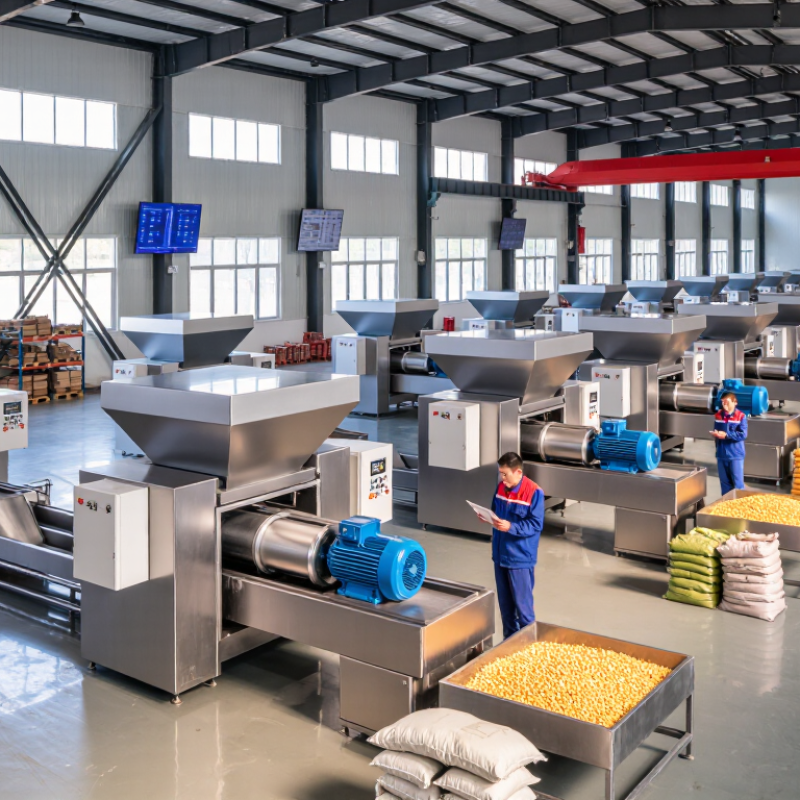
Choosing the best Feed Pellet Mill manufacturer in China is not simply a matter of picking the biggest name. Buyers must match equipment to their materials, production goals, and maintenance capacity. A mill designed for dry corn may not perform equally well with damp grass or fibrous agricultural residues. The details matter. Ask what materials the machine has processed, and request a trial using your own sample when possible.
Compare manufacturers on measurable points: stated output, pellet diameter, motor power, die and roller materials, and expected wear-part life. Then check whether those figures are supported by test records or clear operating conditions. A quoted capacity without information about feedstock and moisture can be misleading. One test helps. Look closely at the support behind the machine, too. Can the supplier explain installation, operator training, spare-parts availability, and routine lubrication? These practical answers often reveal more than polished brochures.
This guide considers Chinese manufacturers through those questions rather than declaring a universal winner. It outlines how to assess factory experience, product range, quality controls, communication, and after-sales service. Buyers should also verify references and inspect production capabilities, in person or through a documented remote review. No checklist removes every risk. Real performance can vary with raw materials, operator skill, and upkeep, and that deserves honest attention. The strongest choice is the one whose evidence fits your operation—not merely the one with the lowest quotation or most impressive claims.
What Makes a Feed Pellet Mill Manufacturer Stand Out?
A feed pellet mill manufacturer stands out through evidence, not impressive claims. Ask how the machine handles your actual ingredients, including their moisture, fiber, and particle size. A mill tested on one formula may perform differently with another. Request a trial using your feed mix, and check pellet durability, output, and energy use under recorded conditions. Clear specifications matter. So does honest discussion of limits, such as die wear or reduced capacity with fibrous material. A polished brochure cannot replace practical test data.
Good manufacturers explain installation, operator training, maintenance intervals, and troubleshooting in plain language. Look for guarded moving parts, accessible cleaning points, and manuals with clear diagrams. If possible, speak with existing users who process similar feed; their experience may reveal issues a factory demonstration misses. Support quality can vary, and even a well-built mill needs adjustment as ingredients change. I would also compare service promises against actual response times, rather than assuming every promise is dependable. A little uncertainty is useful: ask what the machine cannot do well.
How China’s Feed Pellet Mill Industry Is Organized
China’s feed pellet mill industry is not built around a single factory model. It includes equipment makers, component suppliers, and engineering firms that assemble complete production lines. Some focus on compact mills for farms, while others design systems for larger feed plants. Their work may cover grinding, mixing, conditioning, pelleting, cooling, and screening. Details matter. Die-hole size, roller pressure, and steam conditioning affect pellet durability and output. Motors, bearings, and control panels may come from separate suppliers, so performance depends on integration, not just the mill itself. This structure serves different budgets and feed recipes, but it can make equipment comparisons difficult.
Buyers should ask who designs the process, who makes the core machine, and who handles commissioning. Request a capacity range tied to a stated formula and moisture level; a bare tonnes-per-hour figure is incomplete. Check die and roller specifications, spare-part availability, electrical requirements, and service response times. Small checks matter. A polished brochure cannot prove stable operation, and a low price does not reveal the cost of downtime. Factory visits or test runs can help, though a brief demonstration may not reflect months of changing ingredients. Even a careful checklist cannot predict every variation. Supplier roles can blur, so clear answers deserve as much attention as the machine itself.
China’s Feed Pellet Mill Industry: Organized Around End-Use Demand
China’s feed-milling equipment market serves several major livestock and aquaculture segments. The chart shows 2023 industrial feed production by selected segment—not pellet-mill manufacturers’ market shares. Feed output indicates the scale of demand each segment represents; not all feed is produced as pellets.
Source: China Feed Industry Association, 2023 feed industry statistics. Figures are in million metric tons.
Key Manufacturers and Their Product Specialties
Who Makes the Best Feed Pellet Mill in China? Key Manufacturers and Their Product Specialties
There is no single best feed pellet mill maker for every farm or feed plant. Chinese manufacturers often specialize in different machine sizes and production needs. Smaller flat-die mills suit limited batches and straightforward feed mixes. Larger ring-die systems are designed for steady, higher-volume production. Some suppliers focus on complete lines, including grinding, mixing, conditioning, and pellet cooling. Others concentrate on the pellet press and replacement parts. Compare the equipment with your actual ingredients, target output, and available power.
Product details matter more than broad capacity claims. Check the die diameter, roller setup, motor rating, and recommended moisture range. Ask for output figures using a feed formula similar to yours; material and pellet size can change results. Review drawings, maintenance instructions, spare-part availability, and warranty terms before ordering. A factory trial can help reveal how evenly the machine feeds and whether pellets hold their shape. Brochures can be polished. Real operating conditions are less tidy.
Tips: Request a written test report and confirm what feed was tested. Ask how often rollers and dies need adjustment. Compare service response times, not just purchase prices. A supplier’s specialty may fit your needs, but verify the details independently.
How to Compare Quality, Capacity, and After-Sales Support
Choosing a feed pellet mill in China should begin with evidence, not a headline capacity figure. Ask for a trial using your actual feed mix, moisture level, and target pellet size. Watch how evenly the machine feeds material and whether pellets leave the die with a consistent shape. Check the motor, gearbox, bearings, and die access; these affect uptime and routine maintenance. Request material specifications and inspection records, not just polished product photos. Small details matter. A clear technical drawing may reveal more than a sales promise.
Compare stated output with your intended formula and operating hours. Capacity changes with ingredients, conditioning, die openings, and operator practice, so ask for test data and the conditions behind it. A number without context is weak evidence. After-sales support deserves equal scrutiny. Confirm spare-parts availability, expected response times, and whether installation and commissioning guidance is provided. Ask what the warranty covers and excludes. If possible, speak with users running similar equipment, while remembering that their experience may not match yours. Even a careful comparison has limits: raw materials and maintenance habits can shift real-world performance. A trial under your own operating conditions may still expose issues that a short demonstration misses.
How to Choose a Manufacturer for Your Production Needs
Choosing a feed pellet mill manufacturer begins with your production needs, not a catalogue headline. List the feed types, target output, available floor space, and daily operating hours. A line handling poultry mash may need different die specifications from one processing coarse cattle feed. Ask the manufacturer to explain those differences in plain terms.
Request a trial using your own ground material and moisture level. Watch the pellet temperature, fines after cooling, motor load, and time needed to change a die. Small details matter. A quoted capacity may depend on a specific formula and operator skill, so ask what conditions the figure assumes. Also check the mill’s build quality, electrical controls, guarding, and the stated service life of wear parts.
After-sales support deserves equal attention. Confirm spare-part lead times, installation guidance, training, warranty terms, and how technical questions are handled. Ask for references from customers processing similar feed, and request a written proposal that lists output assumptions and maintenance intervals. A polished video is not proof of dependable service. No checklist removes every risk; feed formulas and raw materials change. I would leave some room for doubt, then compare trial results and support commitments before choosing a supplier.