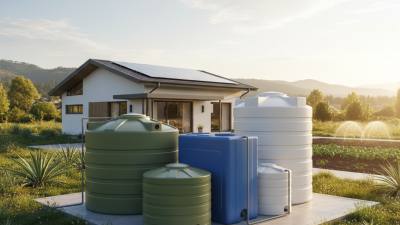
10 Best Plastic Water Storage Tanks for Global Buyers

Reliable water storage is becoming more important as cities expand, droughts intensify, and water systems face pressure. The United Nations World Water Development Report 2024 links water stress with climate change, population growth, and uneven infrastructure investment. These conditions are increasing demand for practical storage solutions, especially in homes, farms, factories, and emergency facilities.

Plastic water storage tanks offer several useful advantages. They are generally lighter than steel tanks, resist many forms of corrosion, and can be installed in locations with limited lifting equipment. Grand View Research reports continued growth in the global water storage systems market, supported by residential development, agricultural use, and industrial water management. Mordor Intelligence also identifies expanding water infrastructure and conservation needs as important market drivers. However, market growth alone does not prove product quality.

Tank selection requires closer inspection. A buyer should check polyethylene grade, wall thickness, ultraviolet protection, fittings, cleaning access, and stated capacity. Food-contact applications require suitable materials and documented compliance, such as NSF/ANSI/CAN 61 where applicable. The World Health Organization also emphasizes hygienic design and safe water handling throughout storage systems. Small details matter. A poorly sealed lid can invite contamination, while a weak outlet may leak under constant pressure.

This guide reviews ten leading plastic water storage tanks for global buyers. It considers durability, installation practicality, maintenance, warranty support, and regional availability. No ranking is perfect. Climate, water chemistry, shipping conditions, and local standards can change the final decision. A tank that performs well in Arizona may need different protection in coastal Indonesia. Readers should verify technical documents before purchasing. That step is easy to overlook.
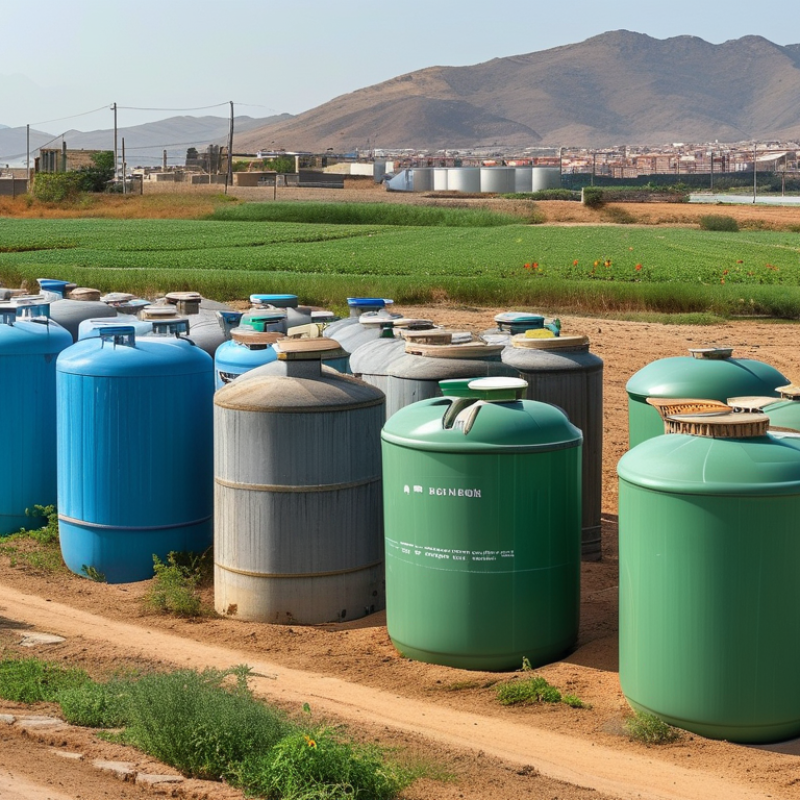
10 Best Plastic Water Storage Tanks for Global Buyers

What Makes a Plastic Water Storage Tank Suitable for Global Use

What Makes a Plastic Water Storage Tank Suitable for Global Use

A globally suitable plastic water tank must perform across climates, regulations, and transport conditions. The need is substantial. WHO and UNICEF’s Joint Monitoring Programme reported that 2.2 billion people lacked safely managed drinking water in 2022. However, no tank is universally best. A design for rural rainwater collection may fail in a crowded coastal city.

Material selection comes first. Food-contact certification, documented resin quality, and migration testing matter for potable water. High-density polyethylene or linear low-density polyethylene can resist corrosion and tolerate outdoor use. UV stabilization is essential in sunny regions. Still, UV resistance is not unlimited. The International Organization for Standardization recommends evaluating plastic products against local exposure and service conditions, rather than relying on appearance alone. Wall thickness, molded ribs, secure lids, and screened vents also reduce deformation and contamination risks.

Global buyers should examine temperature ranges, wind loads, seismic conditions, and installation surfaces. A tank may survive heat but crack after poor anchoring or uneven support. Fittings should match regional pipe standards and remain replaceable. Empty weight affects shipping costs, while nested designs can improve container efficiency. The UNEP Global Plastics Outlook projects plastic waste could nearly triple by 2060 under current policies. Recyclable materials and repairable components therefore deserve attention. Certification helps, but field inspection still matters. That uncomfortable gap is often overlooked.
Key Types of Plastic Water Storage Tanks and Their Main Applications

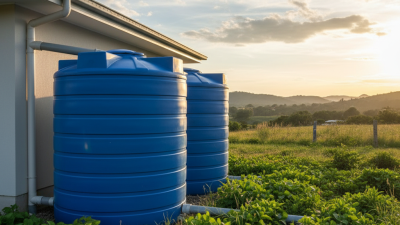
For global buyers, plastic water tanks are not one universal product. Their shape, resin, and installation method determine performance. Vertical tanks suit homes, farms, and facilities with limited ground space. Their tall profile stores large volumes without widening the footprint. Horizontal tanks fit low-clearance sites, trailers, and emergency water points. Shorter walls can simplify access and inspection. Still, a horizontal tank may need more land than expected.

Underground tanks preserve visible space and protect water from sunlight, but excavation requires careful soil assessment. Safe access planning also matters. Above-ground tanks make cleaning, leak checks, and level monitoring easier. Rotationally molded polyethylene tanks resist corrosion and suit rainwater, process water, and agricultural applications. For drinking water, buyers should verify food-contact approval, UV resistance, fittings, and cleaning procedures in the destination market. I have seen projects fail because the tank was suitable, but the connections were not.

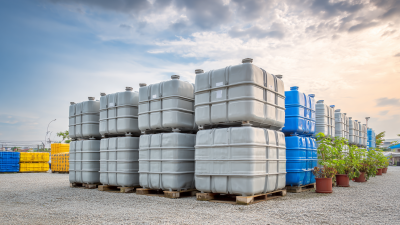
Modular panel tanks serve schools, commercial buildings, and municipal projects where capacity may grow in stages. Slimline tanks work beside walls or narrow service corridors. Double-wall designs add protection where leakage control matters, although they cost more. Capacity calculations should include daily demand, dry periods, delivery limits, and foundation strength. A strong tank on weak concrete is still a poor system. Product drawings, warranty terms, and supplier testing records help buyers compare claims with evidence. No option is perfect; climate, maintenance skills, and local regulations should shape the final choice.

Ten Leading Tank Options for Different Water Storage Requirements

10 Best Plastic Water Storage Tanks for Global Buyers

The right tank depends on water quality, space, climate, and installation access. The WHO and UNICEF Joint Monitoring Programme reported that 2.2 billion people lacked safely managed drinking water in 2022. Reliable storage remains practical infrastructure, not a decorative upgrade. Ten leading options cover different needs: slimline tanks for narrow yards, vertical tanks for efficient footprints, horizontal tanks for low-clearance sites, underground tanks for protected storage, modular panel tanks for large facilities, potable-grade tanks for drinking water, rainwater tanks for household collection, agricultural tanks for irrigation, fire-reserve tanks for emergency supply, and insulated tanks for severe heat or cold.

Material selection deserves careful checking. Rotomolded polyethylene resists corrosion and handles many outdoor conditions. Dark, opaque walls can reduce light penetration and algae growth. Food-contact applications should meet recognized requirements, such as NSF/ANSI 61 or equivalent national standards. The U.S. EPA identifies safe materials and proper storage as important parts of drinking-water protection. A tank may still fail when fittings, seals, or exposed pipework are poorly selected.

Capacity should reflect daily use, delivery delays, and emergency demand. FAO water-management guidance shows that agricultural needs can vary sharply with crop and climate. Measure the foundation twice. A full 5,000-liter tank can weigh about five tonnes. This detail is often underestimated. Buyers should verify wind loads, seismic conditions, overflow routes, cleaning access, and local approvals. No option is universally best; even a technically sound tank can disappoint when maintenance is ignored.

10 Best Plastic Water Storage Tanks for Global Buyers - Ten Leading Tank Options for Different Water Storage Requirements
No. Tank Option Typical Capacity Common Material Approximate Shape and Dimensions Recommended Application Main Advantages Important Selection Considerations
1 Small Vertical Utility Tank 200–1,000 L
(53–264 gal)
UV-stabilized, food-grade polyethylene Vertical cylindrical tank; approximately 0.65–1.10 m diameter and 0.80–1.70 m high Household water storage, gardening, small workshops, and emergency reserves Compact footprint, easy handling, simple installation, and suitable for indoor or outdoor use Confirm doorway access, base strength, inlet height, outlet size, and protection from freezing conditions
2 Slimline Domestic Tank 500–3,000 L
(132–793 gal)
Rotomolded polyethylene Narrow vertical tank; approximately 0.55–0.95 m wide, 0.75–1.30 m deep, and 1.40–2.20 m high Rainwater collection beside houses, narrow side passages, and urban properties Space-efficient design that uses limited side-yard width effectively Check wall clearance, overflow routing, wind exposure, and whether the base is level and fully supported
3 Standard Vertical Storage Tank 1,000–10,000 L
(264–2,642 gal)
UV-stabilized linear polyethylene Vertical cylindrical or tapered tank; approximately 1.00–2.70 m diameter and 1.40–2.80 m high Residential water supply, agricultural use, rainwater harvesting, and general utility storage Good capacity-to-footprint ratio, broad availability of fittings, and straightforward cleaning access Verify usable capacity, access for delivery, foundation loading, venting, and required pipe connections
4 Large Vertical Industrial Tank 10,000–50,000 L
(2,642–13,209 gal)
Heavy-duty polyethylene, commonly rotationally molded Large vertical cylindrical tank; approximately 2.40–4.00 m diameter and 2.50–5.50 m high Commercial facilities, farms, construction sites, and municipal or institutional water reserves High storage volume with relatively small ground area compared with horizontal tanks Requires engineered support, delivery planning, overflow management, access equipment, and suitable anchoring where necessary
5 Low-Profile Horizontal Tank 500–5,000 L
(132–1,321 gal)
UV-resistant polyethylene Horizontal cylindrical or capsule-shaped tank; approximately 0.90–1.60 m diameter and 1.50–4.00 m long Low-clearance areas, vehicle service operations, agricultural water transport, and temporary storage Lower overall height, stable center of gravity, and convenient access for many installations Use a continuous level support surface and check baffle requirements if the tank will be transported while partially filled
6 Underground Cistern Tank 2,000–20,000 L
(528–5,283 gal)
Reinforced polyethylene designed for buried installation Low-profile cylindrical or rectangular tank; approximately 1.50–3.50 m long, 1.20–2.50 m wide, and 1.20–2.20 m high Rainwater harvesting, landscape irrigation, fire-water reserve, and properties with limited visible space Preserves surface area and protects stored water from direct sunlight and outdoor temperature changes Follow the manufacturer’s burial depth, backfill, groundwater, traffic-load, access-cover, and drainage requirements
7 Rectangular Modular Tank 500–10,000 L
(132–2,642 gal)
Food-grade polyethylene or polypropylene panels Rectangular modular construction; common footprints range from 1.00 × 1.00 m to 3.00 × 2.00 m, with heights of 0.80–2.00 m Basements, utility rooms, commercial buildings, and locations requiring efficient use of corners Efficient space utilization, flexible assembly, and easier movement through restricted access routes Inspect panel joints, internal supports, cleaning access, floor loading, and the compatibility of seals and fittings
8 Vertical Cone-Bottom Tank 1,000–15,000 L
(264–3,963 gal)
Polyethylene with a molded conical bottom Vertical tank with cone-shaped base; approximately 1.00–3.00 m diameter and 1.80–4.00 m high Process water, sediment-prone water, agricultural dosing systems, and applications requiring improved drainage Helps direct settled material toward the lower outlet and can simplify draining and cleaning Needs a purpose-built support frame or engineered stand; check outlet elevation and structural loading carefully
9 Baffled Transport Water Tank 300–5,000 L
(79–1,321 gal)
Heavy-duty polyethylene with molded internal baffles Horizontal rectangular or elliptical tank; approximately 0.70–1.60 m wide, 0.70–1.50 m high, and 1.00–4.00 m long Water delivery vehicles, mobile sanitation services, firefighting support, and remote-site operations Internal baffles reduce liquid movement during transport and improve vehicle handling compared with an unbaffled tank Confirm vehicle mounting, load distribution, restraint points, axle limits, drain protection, and local transport regulations
10 Flexible Collapsible Water Bladder 1,000–500,000 L
(264–132,087 gal)
Reinforced PVC, TPU, or similar flexible coated fabric Low-profile pillow-shaped bladder; footprint varies with capacity, commonly 2.00–20.00 m long and 1.50–12.00 m wide Temporary water storage, disaster relief, remote camps, irrigation, and construction projects Lightweight when empty, quick to deploy, and suitable where permanent tanks are impractical Install on a smooth, debris-free, well-drained surface; protect from sharp objects, excessive heat, abrasion, and unauthorized access
Capacities and dimensions are typical planning ranges. Actual specifications vary by tank design, wall thickness, fittings, installation method, and regional requirements.

How to Compare Tank Materials, Capacity, Safety, and Durability

Choosing among the 10 best plastic water storage tanks starts with the water itself. Drinking water needs food-grade polyethylene, verified by independent testing and suitable for local requirements. Irrigation tanks allow more flexibility. Recycled plastic can reduce cost, but its composition and cleaning history require careful checking.

Capacity should match daily use, delivery schedules, and available space. A household tank may need several days of reserve, while a farm system demands larger volume and stronger access points. Measure doorways, foundations, and service clearance before ordering. I once focused on volume and overlooked the tank diameter. Installation became unnecessarily difficult.

Tank safety depends on more than the plastic shell. Look for a secure lid, screened vents, smooth internal surfaces, and fittings that resist leakage. Dark or UV-stabilized material helps limit sunlight damage and algae growth. A flat, reinforced base matters because uneven ground can create stress. Do not place a full tank on loose soil.

Durability involves wall thickness, UV exposure, temperature changes, and handling during transport. Rotomolded tanks usually avoid seams, yet design quality still varies. Ask for wall specifications, warranty terms, and maintenance guidance. A thicker tank is not automatically better if its fittings are weak. Inspect the outlet after delivery. Small cracks can become expensive failures.

Global Buying Factors: Standards, Shipping, Installation, and Maintenance

Choosing among the 10 best plastic water storage tanks requires more than comparing capacity and price. Global buyers should verify material safety, UV resistance, wall thickness, and intended use. Potable-water tanks need documented compliance with relevant food-contact standards. Requirements differ by country, so request current test reports and technical drawings. Do not rely on a supplier’s short certification statement.

Shipping can change the real cost. Check the tank’s packed dimensions, container loading method, customs documents, and delivery insurance. Large tanks may arrive in sections, while molded tanks often need careful protection against impact. I once underestimated unloading space; the truck could not reach the prepared site. Measure gates, roads, and lifting equipment before ordering. Small details matter.

Tips: Confirm the outlet size, inlet position, overflow route, and spare fittings before payment. Prepare a level concrete base, keeping sharp stones away from the tank. Add anchoring where wind, flooding, or seismic movement is possible. Installation should follow the supplier’s load instructions, not guesswork. Leave access for inspection and cleaning. Inspect seams, covers, valves, and supports several times yearly. Clean sediment safely and record repairs. A tank can look sound while its fittings quietly deteriorate. Personally, I would rather replace one inexpensive valve early than discover a leak after a dry season.

10 Best Plastic Water Storage Tanks for Global Buyers

Global Buying Factors: Standards, Shipping, Installation, and Maintenance

Chart focus: Common nominal storage capacities and the corresponding water load for international shipping, structural planning, and installation assessment. Water has a density of approximately 1 kilogram per liter, so the water load in metric tonnes is numerically equal to the capacity in thousands of liters. Tank tare weight, packaging, fittings, and pallets are not included.

Global buying checklist: Confirm potable-water compliance for the destination market, such as NSF/ANSI 61 in North America, WRAS or BS 6920 requirements in the United Kingdom, and AS/NZS 4020 in Australia and New Zealand. Before installation, verify a level load-bearing foundation, access for inspection, suitable inlet and outlet fittings, overflow routing, and local permitting requirements. Inspect tanks regularly and clean them according to local water-safety guidance.

We will help turn your vision into reality

Contact Us