
What Are the Best Types of Dual Exhaust Systems?

A Dual Exhaust System can change more than the sound behind your vehicle. Its layout affects exhaust routing, ground clearance, installation cost, and how easily the system fits your engine and chassis. That makes “best” a practical choice, not a universal winner. SEMA’s 2024 Market Report estimated U.S. specialty-equipment sales at $52.3 billion in 2023, reflecting strong interest in vehicle upgrades. Still, market demand does not prove that every modification improves performance.

The EPA’s 2024 Automotive Trends Report estimated average real-world fuel economy for model-year 2023 vehicles at 27.1 miles per gallon. That figure is useful context, but it does not show that dual exhaust alone raises or lowers fuel economy. Vehicle design, engine tuning, pipe diameter, muffler choice, and driving conditions all matter. Small details count. A poorly matched setup may add noise without delivering useful gains. This guide compares true dual, dual-outlet, and crossover configurations, while explaining their trade-offs in sound, fit, and performance. It also separates measurable factors from common claims, because exhaust results vary from one vehicle to another. Frankly, the perfect system is sometimes less exciting than expected. Check vehicle-specific fitment and reliable test data before choosing.
What Are the Best Types of Dual Exhaust Systems?

How Dual Exhaust Systems Are Configured

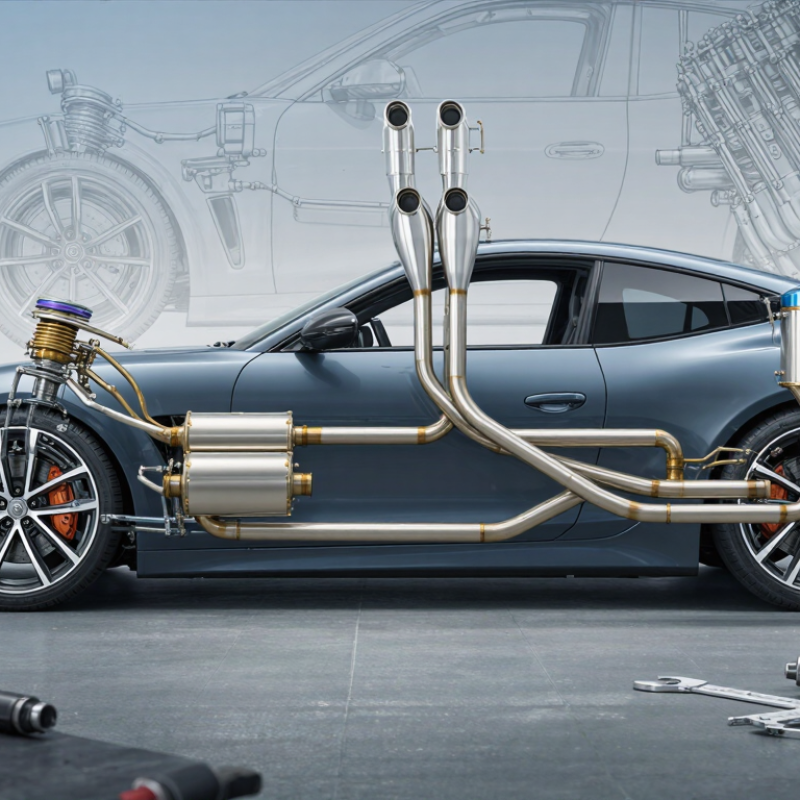
Dual exhaust describes several layouts, not one fixed arrangement. A true dual system gives each bank of a V-shaped engine its own exhaust path. The pipes may run separately from the manifolds to the rear, with one muffler and tailpipe on each side. It can look balanced beneath the car. Clearance still matters.

A crossover changes how those paths interact. An H-pipe joins the pipes with a short cross-connection, while an X-pipe merges and divides their flow more gradually. Placement affects sound and pressure behavior, so the best position depends on engine design and available space. There is no universal winner. Even small bends can matter.

Other systems use one main pipe that splits near the rear, creating two visible outlets without two fully independent paths. This layout may simplify packaging, especially where the chassis leaves little room. Inspect the routing around the driveshaft, fuel tank, suspension, and heat-sensitive parts. A neat drawing can hide a cramped fit. Measure carefully. Muffler location, pipe diameter, and outlet position also shape noise, ground clearance, and maintenance access. A qualified exhaust technician can verify fitment and check for leaks after installation.

True Dual Exhaust Systems and Their Main Benefits

True dual exhaust systems use separate pipes from each cylinder bank, with each path typically serving its own catalytic converter and muffler. This layout can reduce restrictions when pipe diameter and muffler design match the engine’s airflow needs. It may also create a deeper, more balanced exhaust note. The sound is noticeable at idle, especially when two tailpipes sit beneath the rear bumper. Still, dual pipes alone do not guarantee more horsepower. Poor sizing can weaken low-speed response, and gains depend on the full setup.

A useful reality check: the U.S. Environmental Protection Agency’s fuel-economy label methodology uses five test cycles, including cold-temperature and air-conditioning tests. A single dynamometer run cannot prove a lasting real-world fuel-economy gain. Treat advertised performance figures cautiously unless test conditions and vehicle details are provided. True dual systems can also add weight, cost, and maintenance points, so fitment matters.

Tips: Check whether your engine has two cylinder banks and confirm the system’s pipe diameter suits its output. Ask for before-and-after test data from the same vehicle, under comparable conditions. Look beneath the car, too: tight bends, low clearance, and poorly placed hangers can cause trouble. That detail is easy to overlook.

Dual-Exit Systems as Alternatives to True Dual Exhaust

A dual-exit system is a practical alternative to true dual exhaust. It uses one shared exhaust path that splits into two outlets near the rear of the vehicle. Two outlets, one route. The paired tips can create a balanced appearance and may change the exhaust note, depending on the muffler and pipe design. But twin tips do not mean twice the flow or a guaranteed power increase. That distinction is easy to miss. I would not judge a setup by tailpipe count alone.

For a daily driver, a dual-exit layout can be simpler to fit than two fully separate exhaust paths. Check the available space under the rear bumper, the outlet spacing, and whether the pipes clear suspension parts. A close look matters. Poor alignment can leave one tip sitting lower, or cause rattling over bumps. Ask a qualified exhaust technician to check fitment and compatibility with the vehicle’s existing system. Sound can also be more noticeable inside the cabin, especially at steady highway speeds. The right choice depends on your goals, not just appearance; even so, predicting the final sound from photos is imperfect. A test drive after installation can reveal what measurements cannot.

Cat-Back and Axle-Back Dual Exhaust Options

A dual exhaust system uses two outlet paths, but the layout behind them can vary. A cat-back setup replaces components from the catalytic converter to the tailpipes. It may include mid-pipes, mufflers, and new outlets. An axle-back setup changes only the parts behind the rear axle, usually the mufflers and tailpipes. Less hardware is replaced.

The right option depends on your goals and vehicle layout. Cat-back systems offer more scope to change pipe routing and sound, but usually cost more and take longer to install. Axle-back systems are often simpler, though they may produce a smaller change in tone or flow. Two visible tips do not automatically mean better performance. Check pipe diameter, hanger positions, bumper clearance, and spare-tire space before buying. Fit matters.

Tips: Compare the included parts, not just the number of outlets. Ask an installer to check clearances with the vehicle lifted; a pipe can look fine at rest and still rattle over bumps. Listen to a similar setup if possible. Sound descriptions are subjective, and I would not treat them as guarantees. A quieter choice may be the better fit for daily driving.

What Are the Best Types of Dual Exhaust Systems? — Cat-Back and Axle-Back Dual Exhaust Options
Comparison Dual Cat-Back Exhaust Dual Axle-Back Exhaust
What it replaces Typically replaces the exhaust piping from the catalytic converter outlets to the rear of the vehicle. The exact included parts depend on the system design. Typically replaces the rear section of the exhaust, from around the rear axle to the outlets. It commonly includes rear piping and mufflers, depending on the design.
Typical scope A more extensive change that may include mid-pipes, mufflers, over-axle pipes, and tailpipes. A more limited rear-section change, often focused on mufflers, sound, and exhaust-tip placement.
Installation effort Usually more involved because more of the exhaust system is removed and fitted. Fitment and access vary by vehicle. Often simpler than a cat-back installation because fewer exhaust sections are replaced, although some vehicles may still require cutting or specialist work.
Typical relative cost Often higher than an axle-back option because it includes more components and can require more installation time. Often lower than a cat-back option, but materials, vehicle layout, and installation needs can change the total cost.
Sound changes Can change exhaust tone and volume through a larger portion of the system. The result depends on pipe layout, mufflers, resonators, and engine configuration. Can change tone and volume mainly through the rear section, especially when the mufflers are replaced.
Potential performance effect May alter exhaust flow, but power gains are vehicle- and setup-dependent and are not guaranteed. May affect flow and sound, but any measurable power change is vehicle- and setup-dependent and is not guaranteed.
Emissions equipment A conventional cat-back system starts downstream of the catalytic converters and generally does not replace them. Confirm the exact system layout and local requirements. Usually changes components farther downstream and generally does not replace catalytic converters. Confirm the parts included and local requirements.
Best suited for Drivers seeking a broader exhaust-system change, with more opportunity to modify piping layout as well as rear sound. Drivers seeking a more limited rear-section change, often prioritizing a different exhaust tone with fewer components replaced.
Key fitment check Verify vehicle year, model, engine, transmission, catalytic-converter outlet configuration, pipe routing, and outlet location. Verify vehicle year, model, engine, axle and rear-suspension layout, muffler fitment, and desired outlet location.
Important: “Dual” can describe two visible exhaust outlets; it does not always mean two completely independent exhaust paths from the engine. Check the pipe diagram and included components to confirm the actual configuration. Local noise and emissions rules may also apply.

How to Choose a Dual Exhaust System for Your Vehicle

A dual exhaust should match your engine, chassis, and driving needs—not just the look of two polished tailpipes. Check whether your engine has two exhaust banks, then inspect the underbody for space around the rear axle, fuel tank, and suspension. A single-to-dual conversion may need extra piping and hangers, while a true dual system routes each bank separately. Measure first. Clearance matters.

Pipe diameter and muffler design affect sound and performance. Bigger pipes are not automatically better; an oversized system can weaken low-speed response on some setups. The U.S. EPA’s 2024 Automotive Trends Report puts average new-vehicle fuel economy at 27.1 mpg for model year 2023. That fleet figure does not predict gains from an exhaust change. Treat mileage claims cautiously, and compare before-and-after measurements on a dynamometer using consistent conditions. Small differences can be hard to interpret.

Choose corrosion-resistant materials suited to your climate, and confirm the system works with your vehicle’s emissions equipment. Check cabin drone, too. A loud cold start may sound appealing, but a steady highway hum can become tiring. I would not choose by tailpipe appearance alone. Ask an experienced installer to inspect fitment and explain any required modifications before purchase. A little awkward planning now beats discovering a pipe touches the suspension later.

Choosing Dual Exhaust Pipe Size

This chart compares the combined cross-sectional area of two equal-diameter pipes. The values are calculated from pipe diameter; they are not measured airflow or horsepower results. When choosing a system, consider engine output, vehicle fitment, sound preference, emissions requirements, and whether an axle-back, cat-back, or true dual layout suits your needs. Larger pipes are not automatically better.

We will help turn your vision into reality

Contact Us