What is Blow Molding and How Does it Benefit Manufacturers?
Blow molding is a crucial manufacturing process, widely used in producing plastic containers and components. According to a recent industry report, the blow molding market is expected to grow by 5% annually over the next five years. This growth is driven by increasing demand for lightweight packaging and sustainable materials.
John Anderson, a noted expert in the blow molding field, emphasizes its significance: “Blow molding not only enhances production efficiency but also reduces material waste.” Manufacturers are increasingly adopting blow molding for its ability to produce complex shapes quickly. Yet, challenges remain, such as ensuring quality control throughout the production cycle.
The blow molding process allows for the creation of hollow parts, which is essential in industries like beverages and automotive. However, manufacturers must constantly innovate to stay competitive. The balance between cost, quality, and sustainability often leads to difficult decisions. As the industry evolves, embracing new technologies and materials will be essential for success.

What is Blow Molding?
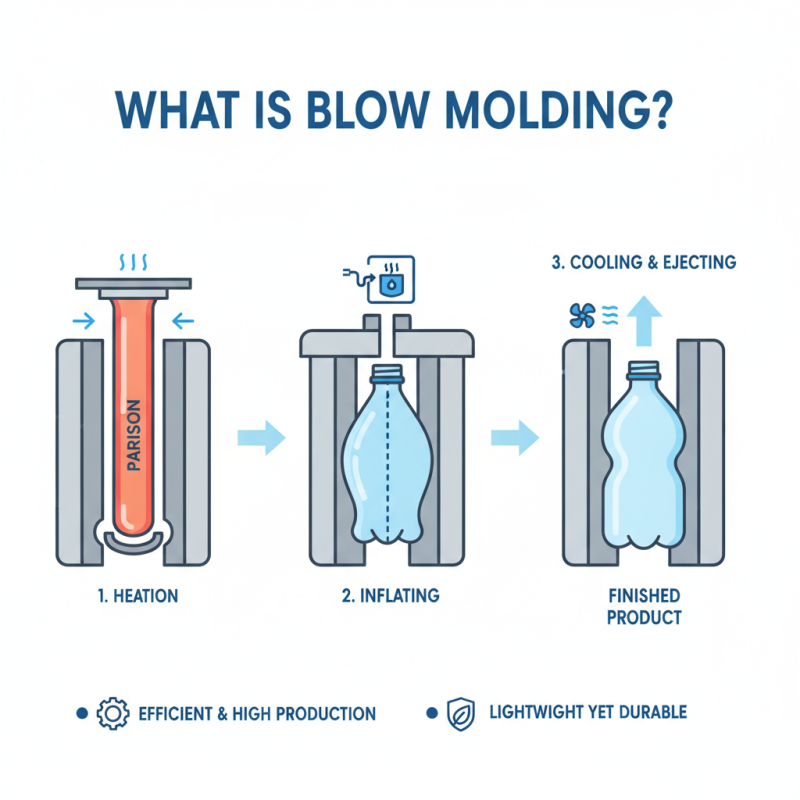
Blow molding is a manufacturing process used to create hollow plastic products. It involves inflating a heated plastic tube until it forms the desired shape against a mold. This method is efficient and allows for high production rates. Manufacturers benefit from its capacity to produce lightweight yet durable items.
The process starts with melting plastic pellets. The liquid plastic is extruded into a tube, known as a parison. Air is then blown into the parison to expand it. This creates precise shapes, ranging from bottles to large containers. The ability to use various resins means manufacturers can choose materials that meet specific performance requirements.
Blow molding is not without its challenges. Variations in temperature and pressure can affect the final product quality. Consistent quality control is essential. Manufacturers must invest in training and technology to minimize defects. Despite these challenges, the advantages often outweigh the drawbacks. This adaptability makes blow molding a valuable technique in modern manufacturing.
The Process of Blow Molding Explained
Blow molding is a versatile manufacturing process used to create hollow plastic parts. It involves heating a plastic material until it is pliable and then inflating it into a mold using air pressure. The process starts with a preform, which is a shaped piece of plastic. Once heated, this preform is placed in a mold where air is blown into it, expanding the plastic to fit the mold’s shape. This method is widely used for producing containers, bottles, and other hollow objects.
The benefits of blow molding for manufacturers are significant. It allows for high production rates and efficiency, particularly for large volumes. The ability to produce complex shapes with thin walls reduces material waste. This is crucial for cost-effectiveness in production. However, it’s essential to note that the initial setup costs, including molds, can be high, which may be a barrier for some manufacturers. Regular maintenance of molds is also necessary to ensure quality and reduce defects, requiring time and investment.
While blow molding has many advantages, it’s not without challenges. Variations in temperature or material can affect the final product’s quality. Manufacturers must ensure precise control over these factors to minimize issues. Investing in skilled technicians can be vital in overcoming these challenges and achieving desired outcomes. By constantly evaluating the process, manufacturers can improve efficiency and product quality in the ever-evolving market.
Types of Blow Molding Techniques
Blow molding is a popular manufacturing process used to create plastic parts. There are various techniques within blow molding, each offering unique advantages for different applications. The three primary types are extrusion blow molding, injection blow molding, and stretch blow molding.
In extrusion blow molding, plastic is heated and extruded into a hollow tube. This tube is then inflated with air to form the desired shape. It is effective for producing large containers. According to a report by the Plastics Industry Association, this method accounts for over 60% of the blow molding market due to its efficiency in producing high volumes.
Injection blow molding involves injecting molten plastic into a mold, which is then blow molded. This technique offers precision and allows for complex shapes with thinner walls. It is commonly used for small to medium-sized bottles. However, this method can be more costly due to longer cycle times.
Stretch blow molding creates stronger, more durable products by stretching the plastic while shaping it. This technique is ideal for producing PET bottles. Research indicates that this method improves the mechanical properties of the plastic but can be less effective for larger items due to dimensional limitations. Each of these methods has its pros and cons, and manufacturers must choose based on their specific needs.
What is Blow Molding and How Does it Benefit Manufacturers? - Types of Blow Molding Techniques
| Technique Type |
Description |
Common Applications |
Benefits |
| Extrusion Blow Molding |
Utilizes continuous extrusion of molten plastic to form parts. |
Bottles, containers, and large plastic components. |
High production efficiency and good control over wall thickness. |
| Injection Blow Molding |
Involves injection molding of a preform that is then blown into shape. |
Cosmetic bottles, medical containers, and small parts. |
Excellent surface finish and dimensional accuracy. |
| Stretch Blow Molding |
Combines stretching of the preform and blowing to create strong, lightweight containers. |
PET bottles for beverages, jars, and other containers. |
Improved strength and clarity, suitable for high-volume production. |
| Multi-layer Blow Molding |
Involves creating containers with multiple layers of different materials. |
Barrier bottles, food packaging, and specialty containers. |
Enhances barrier properties and can reduce costs. |
Advantages of Blow Molding for Manufacturers
Blow molding is a manufacturing process that creates hollow plastic parts. It offers numerous advantages for manufacturers. One major benefit is efficiency. According to industry reports, blow molding can produce thousands of parts in just a few hours. This efficiency translates to reduced labor costs and faster time-to-market for products.
Another advantage is the design flexibility. Manufacturers can create complex shapes and sizes easily. This allows for creativity in product design, leading to unique offerings. A study by the Plastic Industry Association shows that over 70% of manufacturers value this aspect, as it enables differentiation in a competitive market.
Tip: When considering blow molding, assess your product requirements thoroughly. Not all designs are suitable for this process.
Cost-effectiveness is another key factor. With lower material waste, manufacturers can save significantly. Reports estimate that blow molding reduces waste by up to 20% compared to other processes. However, it's important to evaluate initial investment costs, as they can vary.
Tip: Perform a cost analysis to understand potential savings in the long term.
Manufacturers should also be aware of the quality control challenges in blow molding. Inconsistent wall thickness can lead to product failures. Continuous monitoring during production is essential to maintain quality standards.
Advantages of Blow Molding for Manufacturers
Applications of Blow Molding in Various Industries
Blow molding is a vital manufacturing process, extensively used across different industries. This technique creates hollow plastic products by inflating heated plastic into a mold. It has gained traction due to its efficiency and versatility. Industries like packaging, automotive, and consumer goods rely on blow molding for producing a variety of items.
In the packaging sector, blow molding is prevalent for creating bottles and containers. These products are lightweight and durable, making them suitable for beverages and cosmetics. The automotive industry benefits as well, using blow molding for fuel tanks and plastic body parts. This method allows for complex designs and shapes, enhancing vehicle aesthetics and performance.
Despite its advantages, blow molding has room for improvement. Manufacturers must address waste management. The process can generate scrap material that needs recycling. Additionally, achieving precise quality control can be challenging. Variations in temperature or pressure can lead to inconsistencies in product thickness. Continuous innovation is essential to overcome these hurdles.