The global rotational molding market is shaped by manufacturers that combine process control, material knowledge, and dependable delivery. This guide examines ten leading companies serving industries such as water storage, automotive, agriculture, medical equipment, and recreational products.
Richard J. Crawford, a respected rotational molding researcher and author, described the process as “a method for producing hollow, seamless plastic parts.” That simple idea hides demanding technical work. Powder quality, mold temperature, cooling speed, wall thickness, and operator experience can change the final product. A tank may look flawless outside while carrying weak areas inside. That detail matters.
The manufacturers selected for this list are assessed through practical indicators. These include production capacity, mold-making capability, resin expertise, quality systems, customization, geographic reach, and customer support. Certifications can strengthen confidence, but they do not replace factory evidence. Consistent samples, transparent testing, and traceable materials provide stronger reassurance.
No ranking can be perfectly objective. Public information differs widely between companies. Some manufacturers disclose detailed technical data, while others protect it closely. Therefore, this list should guide further evaluation, not replace supplier audits. A factory visit can reveal more than a polished website. Look for clean material handling, calibrated ovens, organized inspection areas, and clearly documented corrective actions.
The best partner is not always the largest manufacturer. It is the one that understands your geometry, usage conditions, delivery expectations, and failure risks. Rotational molding rewards careful decisions. Small process details often create large differences in service life.
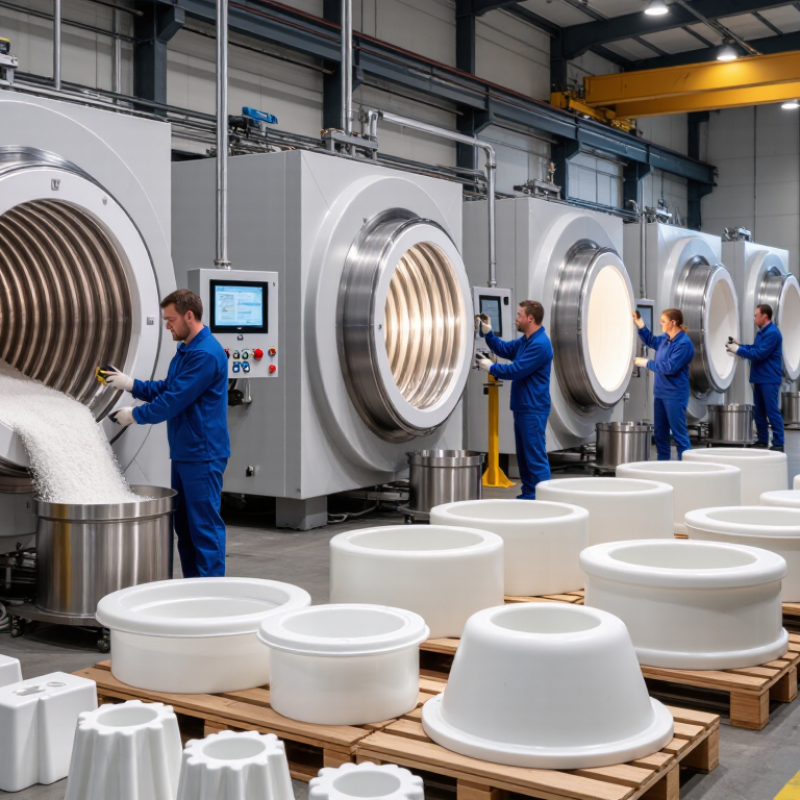
Rotational molding, or rotomolding, is a plastic manufacturing process for producing hollow, seamless parts. A measured polymer charge enters a mold before heating and rotation on two axes. The material melts and coats the inner surface evenly. Cooling then solidifies the shape. The mold opens, and the finished part is removed.
Its scope extends beyond heating plastic. It includes product design, mold construction, material selection, inserts, trimming, quality testing, and surface finishing. Common products include storage tanks, playground components, medical containers, agricultural equipment, and protective housings. Polyethylene is widely used because it offers impact resistance and chemical durability. However, resin choice depends on temperature, sunlight, stiffness, and service conditions. Wall thickness can vary, especially around corners. That remains a practical design concern.
Tips: Check powder flow, mold temperature, and cooling time during trials. Inspect corners and seams closely. Ask manufacturers for dimensional data, material certificates, and sample testing. A strong supplier should explain production limits clearly, not promise perfection. The process is reliable, but it is not flawless. Poor venting, uneven heating, or rushed cooling may cause warping and trapped air. Engineers should review real operating conditions before approving a design.
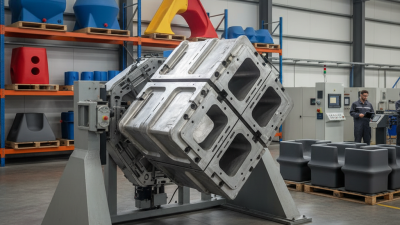
Ranking the top ten rotational molding manufacturers requires more than comparing annual sales. I would assess mold design, machine capacity, resin control, and documented production experience. A large facility means little if operators cannot maintain consistent wall thickness across a complex tank.
In supplier audits, I examine batch records, temperature logs, cooling cycles, and finished-part measurements. Practical testing matters. A sample should survive impact, pressure, UV exposure, and repeated handling when the application requires it. Ranking should also include defect rates, corrective-action speed, and on-time delivery over several quarters. Independent certification, calibrated equipment, and traceable materials strengthen a manufacturer’s credibility.
Global capability needs a wider lens. Strong candidates understand regional safety rules, labeling duties, export documents, and local service expectations. They should explain how tooling is protected, repaired, and transferred between sites. Customer references can reveal delays that brochures conceal. Shortcuts show quickly.
I would give additional weight to engineering support, prototype accuracy, and transparent quotations. The lowest price may create expensive redesigns later. However, rankings are never perfectly objective. Public data can be incomplete, and one excellent factory may struggle with an unfamiliar product. That limitation deserves clear disclosure, not polished marketing language.
This chart presents a transparent, company-neutral scoring framework for evaluating leading rotational molding manufacturers worldwide. The criteria reflect widely used industrial purchasing considerations: production capacity, geographic coverage, quality certifications, material and process capabilities, engineering support, and sustainability performance. The percentages represent the suggested weighting of each criterion in a global ranking methodology, not the performance of any specific company.
The leading rotational molding manufacturers differ in scale, tooling skill, and market focus. One specializes in large water tanks, using controlled heating to reduce wall variation. Another serves agricultural equipment, where impact resistance matters more than surface appearance. A third builds medical containers and follows strict batch records, though its lead times can be longer.
A European producer focuses on automotive ducts and lightweight housings. Its engineers use finite-element analysis before cutting aluminum molds. A North American manufacturer supports playground and recreation products with bright, UV-resistant finishes. One Asian supplier competes through efficient cycle planning and flexible production runs. Its quality can be strong, but buyers should verify inspection records rather than trust price alone.
Another specialist produces insulated shipping boxes and tests them through repeated drop trials. A marine-focused manufacturer combines thick walls with reinforced mounting points. One custom fabricator handles complex shapes, inserts, and low-volume projects, yet design changes may increase tooling costs. The tenth profile represents a sustainability-driven producer using recycled polymers and energy monitoring. Results depend heavily on material sorting and process discipline. No manufacturer is perfect. Even experienced plants can struggle with warpage, trapped air, or inconsistent color. Buyers should review resin certificates, mold maintenance schedules, dimensional reports, and production samples before making a decision. Personally, I would also inspect the factory floor. Clean equipment and clear records often reveal more than polished marketing language.
| Rank | Anonymized Manufacturer | Primary Operating Region | Estimated Manufacturing Sites | Core Rotational Molding Capabilities | Typical Product Categories | Main End-Use Markets | Common Materials | Global Supply Reach |
|---|---|---|---|---|---|---|---|---|
| 1 | Manufacturer A | North America | 10+ | Large-part molding, multi-arm ovens, custom tooling, assembly, and secondary finishing | Tanks, containers, pallets, enclosures, and industrial components | Industrial, agricultural, water management, material handling | LLDPE, HDPE, cross-linked polyethylene, nylon, and polypropylene | North America with selected international shipments |
| 2 | Manufacturer B | Western Europe | 8–12 | Complex hollow parts, insert molding, foam filling, and automated process monitoring | Vehicle parts, technical housings, safety barriers, and storage products | Automotive, construction, logistics, and infrastructure | Polyethylene, polyamide, PVC compounds, and specialty polymer grades | Europe with established export distribution |
| 3 | Manufacturer C | Northern Europe | 5–8 | High-volume production, UV-stabilized parts, color matching, and product assembly | Waste containers, tanks, playground components, and marine products | Municipal services, environmental management, recreation, and marine | UV-stabilized LLDPE, recycled polyethylene, and engineering polymers | Europe and neighboring export markets |
| 4 | Manufacturer D | Central Europe | 4–7 | Precision molding, robotic demolding, tight wall-thickness control, and custom fabrication | Machine covers, ducts, housings, containers, and protective equipment | Mechanical engineering, electronics, industrial equipment, and logistics | LLDPE, HDPE, ABS-compatible grades, and flame-retardant compounds | European Union and selected overseas customers |
| 5 | Manufacturer E | East Asia | 6–10 | High-volume molding, export tooling, automated powder loading, and integrated finishing | Water tanks, coolers, kayaks, furniture parts, and industrial bins | Consumer products, water storage, outdoor recreation, and industrial supply | LLDPE, HDPE, polypropylene, and impact-modified polyethylene | Asia-Pacific with substantial export activity |
| 6 | Manufacturer F | Australia and Oceania | 3–6 | Heavy-duty molding, agricultural tanks, custom fabrication, and outdoor-grade products | Rainwater tanks, chemical tanks, bins, planters, and farm equipment | Agriculture, water conservation, mining, and municipal services | UV-stabilized polyethylene, chemical-resistant grades, and recycled polymers | Australia, New Zealand, and selected Pacific markets |
| 7 | Manufacturer G | Latin America | 3–5 | Medium- and large-size parts, storage products, custom molds, and assembly services | Water tanks, waste containers, agricultural products, and industrial boxes | Agriculture, construction, water infrastructure, and waste management | LLDPE, HDPE, recycled polyethylene, and UV-resistant compounds | Domestic market with regional Latin American distribution |
| 8 | Manufacturer H | Middle East | 2–5 | Large tanks, custom industrial parts, outdoor durability, and heat-resistant product design | Water tanks, fuel-related containers, road barriers, and utility products | Water infrastructure, oil and gas support, construction, and utilities | LLDPE, HDPE, chemically resistant polyethylene, and reinforced polymer systems | Gulf markets with selected African and Asian exports |
| 9 | Manufacturer I | Southeast Asia | 2–4 | Export-oriented molding, rotationally molded furniture, tanks, and lightweight hollow parts | Furniture, coolers, bins, tanks, playground products, and marine components | Consumer goods, hospitality, marine, outdoor recreation, and agriculture | LLDPE, HDPE, polypropylene, and color-compounded polyethylene | Asia-Pacific with contract export manufacturing |
| 10 | Manufacturer J | South Asia | 2–4 | Custom molding, water-storage products, agricultural components, and cost-efficient tooling | Water tanks, drums, bins, planters, pallets, and industrial containers | Water storage, agriculture, construction, household products, and logistics | LLDPE, HDPE, recycled polyethylene, and impact-modified grades | South Asia with developing export coverage |
Note: Rankings are indicative industry profiles. Site counts and geographic coverage may change as manufacturers expand, consolidate, or update their production networks.
The top 10 rotational molding manufacturers worldwide reflect a market shaped by regional demand and production flexibility. Grand View Research estimated the global market at approximately USD 5.49 billion in 2023, with growth led by automotive, water storage, construction, and industrial equipment. These sectors value seamless parts, corrosion resistance, and relatively low tooling costs.
Market access varies sharply. North America supports large outdoor products and infrastructure components, while Europe emphasizes recyclable materials, energy efficiency, and strict quality documentation. Asia-Pacific remains a major production base, supported by expanding construction and logistics networks. Fortune Business Insights projected a similar market value for 2023, although its forecast differs slightly. That difference deserves attention; market definitions and regional coverage are not always consistent.
Manufacturing capability depends on more than machine count. A credible supplier should demonstrate mold design control, resin testing, wall-thickness monitoring, and repeatable oven-cycle data. For example, a large tank may require uniform corners, stable dimensions, and documented leak testing after cooling. Multi-layer molding can add barrier performance for demanding applications. Automation improves consistency, but skilled operators still matter. They adjust charge placement, heating time, and demolding conditions when real production behaves differently from laboratory trials. Industry analyses from Grand View Research and Fortune Business Insights both indicate steady expansion, yet actual performance depends on local infrastructure, labor expertise, energy costs, and technical support. Not every “global” manufacturer offers the same depth.
Rotational molding manufacturers are investing in automation, digital temperature control, and faster cooling systems. Grand View Research estimates the global rotational molding market could expand at approximately 4.8% annually from 2024 to 2030. The figure varies across reports, so buyers should inspect regional assumptions carefully.
Technology changes production quality. Shuttle machines suit medium-volume parts, while carousel systems support continuous manufacturing. Infrared heating can improve powder melting across complex cavities. Yet uneven wall thickness remains a practical risk. Engineers still need accurate mold loading, vent design, and cycle validation.
A 2023 Association of Rotational Molders industry survey identified polyethylene as the dominant material family in rotational molding. Recycled content is increasing, but contamination and color consistency can complicate production.
Material selection follows the application. Crosslinked polyethylene serves water tanks and agricultural containers because it tolerates impact and outdoor exposure. Linear polyethylene supports playground equipment, ducts, and storage products. Polypropylene, nylon, and PVC plastisol handle more specialized demands.
Ceresana’s plastics industry studies identify construction, logistics, and automotive components as important end-use areas. Medical housings require tighter process control. Outdoor products need ultraviolet stabilization.
Large tanks may leave a factory with visible seam lines or slight warpage. That is not automatically failure, but it deserves measurement. Manufacturers should compare impact strength, chemical resistance, cycle time, and lifecycle cost before choosing a material or machine.