
What Are the Top Solvent Free Lamination Machine Suppliers?

Solvent Free Lamination is reshaping flexible packaging production, but choosing a supplier requires more than comparing machine speed. Smithers’ The Future of Flexible Packaging to 2028 reports continued growth in sustainable packaging formats, driven by recyclability, lower emissions, and material efficiency. These pressures are strengthening demand for solvent-free equipment.

The technology uses no drying oven for solvent evaporation. It can reduce factory energy consumption, shorten production layouts, and support cleaner working conditions. However, results depend on adhesive chemistry, web tension, curing time, and operator discipline. A fast machine can still produce weak bonds or visible bubbles.

Industry leader Marcello De Rosa of Nordmeccanica has stated, “Solventless lamination is a process, not merely a machine purchase.” That point deserves attention. Supplier quality affects much more than the laminator frame. It includes metering accuracy, automatic thickness control, curing support, troubleshooting, and after-sales training.

MarketsandMarkets’ research on industrial adhesives also identifies sustainability and solvent reduction as important demand drivers. Yet market estimates vary between reports. That uncertainty should encourage careful comparison, not careless purchasing.

This guide examines the top Solvent Free Lamination machine suppliers through practical criteria. These include working width, production speed, adhesive consumption, substrate compatibility, automation, installation support, and lifecycle cost. Some suppliers advertise impressive output figures. Real factories may achieve less. The difference often appears during changeovers, cold-weather production, or thin-film applications. Reliable buyers should request trial runs, verified references, and documented performance data before selecting a long-term equipment partner.
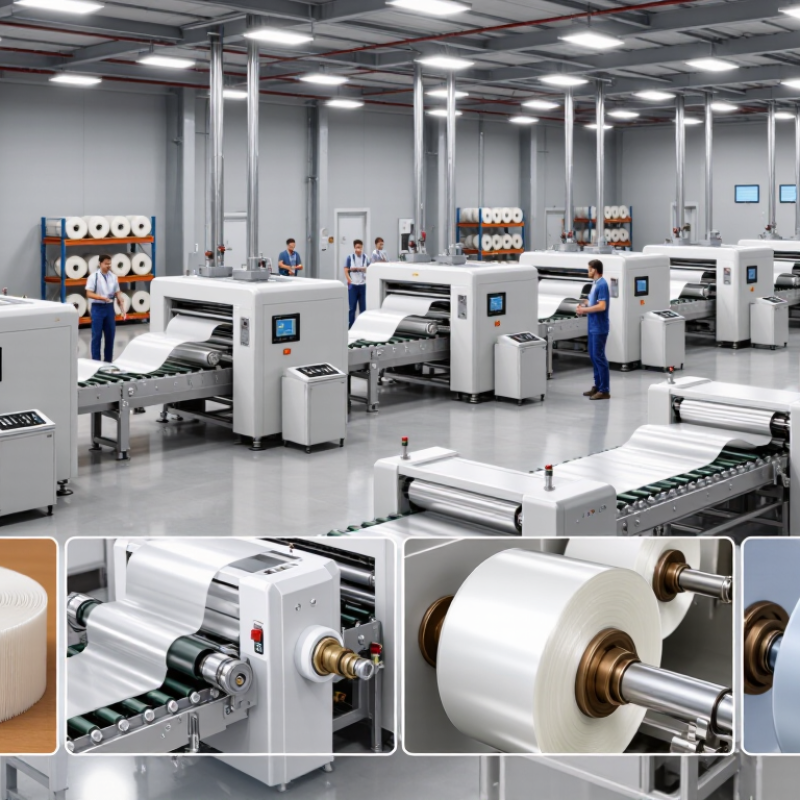
What Are the Top Solvent Free Lamination Machine Suppliers?

What Is a Solvent-Free Lamination Machine?

A solvent-free lamination machine bonds flexible substrates without liquid solvents. It usually meters two reactive polyurethane components onto a film, foil, or paper web. The adhesive then passes through a heated or controlled nip. Curing continues after rewinding, often for several days.

This design removes the drying oven used by solvent-based systems. It can reduce solvent handling, exhaust requirements, and energy demand. However, it is not automatically simple. Mixing accuracy, adhesive temperature, coating weight, and web tension strongly affect bond quality. A small dosing error may create tunnels, wrinkles, or weak edges. Smithers’ report, The Future of Flexible Packaging to 2028, estimates the global flexible packaging market will reach about US$236 billion by 2028. That growth increases demand for stable, efficient lamination equipment. The report also highlights sustainability pressure across packaging production, although actual benefits depend on plant operation.

Tips: Compare suppliers by application testing, control precision, curing support, and technician response time. Ask for trial data using your real film structure. Check whether the machine handles narrow webs and low coating weights. Do not judge performance from speed alone. Faster is not always better. In practice, operators may need a longer setup period than expected, especially when switching adhesive systems. Some specifications look impressive on paper, but factory results can differ. Independent testing remains the safer purchasing step.

How Do Solvent-Free Lamination Machines Work?

How Do Solvent-Free Lamination Machines Work?

Solvent-free lamination machines bond flexible films without using liquid solvents. Most systems use a two-component polyurethane adhesive. Separate pumps meter the resin and hardener before mixing them precisely. The mixed adhesive then passes through a heated coating unit. A controlled layer reaches the first film surface. The laminating nip presses another web against it under steady pressure.

Heat lowers adhesive viscosity and supports smooth coating. Tension controls keep both webs aligned while rollers move continuously. After lamination, the adhesive cures gradually through a chemical reaction. The finished laminate may need several days before reaching full bond strength.

Experienced operators check coat weight, mixing ratio, web tension, and roller temperature. Small errors can create wrinkles, bubbles, or weak edges. The process is cleaner, but it is not effortless. That matters when comparing equipment suppliers.

Tips:

Keep adhesive containers sealed and maintain stable temperatures. Confirm the mixing ratio before every production run. Inspect the nip pressure and coating surface regularly. Test bond strength after curing, not immediately. A rushed inspection can produce false confidence.

In practice, even advanced machines need careful calibration, clean rollers, and trained operators. Suppliers should provide clear technical data, service guidance, and realistic curing information.

Some production teams underestimate setup time. That mistake can reduce output and waste valuable film.

What Makes a Top Supplier Reliable and Competitive?

A top solvent free lamination machine supplier proves reliability through practical performance, not polished promises. The supplier should offer trials using your films, adhesives, and target production speeds. This reveals coating stability, bonding strength, curing behavior, and waste levels before purchase. Experienced engineers should explain web tension, nip pressure, temperature control, and adhesive metering clearly. They should also provide machine drawings, maintenance schedules, safety documents, and transparent performance data. Real production knowledge matters.

Tips: Ask for customer references with similar materials. Request a factory acceptance test. Check spare-part availability and response times. Compare energy use, changeover time, and operator training. A low purchase price can hide expensive downtime. Small details matter.

Reliable suppliers stay involved after installation. Their service team should support commissioning, troubleshooting, and process adjustments remotely or on site. Clear warranty terms are essential, but daily technical support often matters more. Competitive suppliers usually offer modular designs, simple cleaning access, stable automation, and reasonable upgrade options. They should understand regional standards and document compliance properly. Still, no supplier gets everything right. Some quoted capacities may depend on ideal films, skilled operators, or perfect workshop conditions. That deserves careful questioning. A strong supplier accepts difficult questions and records the answers. Their confidence should come from repeatable tests, skilled people, and measurable results rather than aggressive sales language.

What Are the Top Solvent Free Lamination Machine Suppliers? - What Makes a Top Supplier Reliable and Competitive?

Supplier evaluation framework based on commonly specified technical, quality, service, and commercial criteria for solvent-free laminating equipment.

Evaluation Dimension Reliable Supplier Indicator Competitive Technical Benchmark Why It Matters
Solvent-Free Process Compatibility Provides documented compatibility with two-component polyurethane adhesive systems and the customer’s film, foil, paper, or nonwoven structures. Supports solvent-free adhesive coating with controlled mixing, metering, and application parameters. Correct material and adhesive compatibility is essential for bond strength, curing performance, and finished-packaging safety.
Working Width Offers a machine configuration that matches the buyer’s actual web width, trim allowance, and product mix. Common industrial configurations cover approximately 800–2,000 mm working widths, depending on application and machine design. The correct width improves line utilization and avoids paying for unnecessary capacity.
Production Speed Publishes rated speed together with realistic production conditions, adhesive type, web structure, and quality limitations. Many modern solvent-free lines are designed for several hundred metres per minute; the practical speed depends on adhesive and substrate conditions. A transparent speed specification is more valuable than an unsupported maximum-speed claim.
Coating-Weight Control Uses closed-loop metering or accurately calibrated pumps, with documented coating-weight verification procedures. Supports low and stable adhesive add-on levels suitable for the specified laminate construction. Accurate coating reduces adhesive waste while maintaining bond quality and appearance.
Mixing and Metering System Includes controlled component ratio, temperature management where required, alarms, and traceable operating parameters. Provides stable two-component delivery across the approved operating range. Incorrect ratio or unstable metering can cause weak bonding, incomplete curing, or excessive waste.
Web Handling and Tension Control Demonstrates stable tension control across the unwind, coating, laminating, and rewind sections. Provides automatic tension regulation, edge guidance, and suitable nip-pressure adjustment. Stable web handling helps prevent wrinkles, telescoping, blocking, and registration problems.
Curing and Winding Performance Explains curing requirements for the selected adhesive and verifies rewind quality using representative production materials. Supports controlled rewind tension and clean roll formation without relying on solvent evaporation. Solvent-free laminates cure through the adhesive’s chemical reaction, so handling and storage conditions must be controlled.
Automation and Data Logging Provides recipe management, operator access levels, alarms, trend monitoring, and production-data export. Offers a modern HMI with repeatable settings for speed, tension, temperature, pressure, and adhesive delivery. Data visibility improves repeatability, troubleshooting, training, and quality documentation.
Quality and Safety Compliance Supplies a risk assessment, electrical documentation, guarding details, emergency-stop functions, and applicable conformity documentation. Design includes machine guarding, interlocks, safe access, and documented operating procedures. Compliance reduces operational risk and supports installation, audits, and workforce safety.
Factory Acceptance Testing Agrees in advance on test materials, acceptance criteria, coating-weight tolerances, defect limits, and documentation. Performs a documented trial before shipment and provides test results to the purchaser. A clear acceptance test reduces disputes and verifies that the equipment meets the agreed specification.
Installation and Commissioning Provides installation planning, utilities requirements, commissioning support, operator training, and start-up documentation. Offers either on-site or structured remote support with a defined commissioning schedule. Professional start-up support shortens the learning curve and helps achieve stable production sooner.
After-Sales Service Defines response channels, spare-parts availability, remote diagnostics, preventive-maintenance guidance, and escalation procedures. Maintains service documentation and supports commonly used mechanical, electrical, and control components. Responsive service lowers downtime and protects the buyer’s production investment.
Energy and Operating Cost Provides a transparent estimate of electrical demand, adhesive consumption, maintenance needs, and consumable costs. Solvent-free operation eliminates the need for solvent drying and solvent-exhaust handling associated with solvent-based lamination. Total cost of ownership is determined by more than the initial machine price.
Customization Capability Conducts a documented application review before recommending options or modifications. Can configure unwind and rewind formats, coating heads, inspection features, automation, and substrate-handling options. Proper customization improves productivity without adding unnecessary complexity.
Commercial Transparency Provides a detailed quotation covering machine scope, exclusions, delivery terms, warranty, training, installation, and spare parts. Compares options using measurable performance, lifecycle cost, and support obligations rather than price alone. Transparent commercial terms make supplier comparisons fairer and reduce unexpected project costs.
Selection Note: The most competitive supplier is not necessarily the one with the lowest quotation. A stronger choice combines verified application performance, stable coating control, safe machine design, documented acceptance testing, dependable service, and a clear total-cost estimate.

Which Leading Suppliers Offer Solvent-Free Lamination Machines?

Which leading suppliers offer solvent-free lamination machines? The strongest candidates are established flexible-packaging equipment manufacturers, regional engineering integrators, and adhesive-application specialists. They usually provide two- or three-layer lines, automatic tension control, heated coating units, and inline inspection. According to Grand View Research, the global flexible packaging market was valued at about USD 248.9 billion in 2023 and may grow at roughly 4.9% annually through 2030. That growth is increasing demand for cleaner, efficient laminating systems.

Supplier quality depends on more than machine speed. Look for documented coating accuracy, stable web handling, short changeover time, and local service support. Smithers, in The Future of Flexible Packaging to 2028, identifies sustainability and material efficiency as major development pressures. A serious supplier should therefore provide trials with your films, adhesive, and target line speed. Ask for measured bond strength, curing time, energy use, and waste percentage. Marketing figures can look attractive. Factory results matter more.

Tips: Request a sample-lamination test before purchasing. Check whether operators can adjust nip pressure without stopping production. Confirm spare-parts availability in your region. A useful but often missed detail is software training. Even excellent hardware can underperform when recipes are entered inconsistently. No supplier is perfect. Compare weaknesses openly, and record test conditions before making a final decision.

What Are the Top Solvent-Free Lamination Machine Suppliers?

Leading solvent-free lamination equipment is commonly evaluated by web width and production speed. The chart below presents practical industry reference ranges for commercial machine configurations, without ranking or identifying individual suppliers.

Reference ranges shown are typical engineering benchmarks: actual performance depends on substrate structure, adhesive chemistry, coating weight, curing conditions, and machine configuration.

How Should Buyers Compare Suppliers and Choose the Right Machine?

When comparing solvent-free lamination machine suppliers, buyers should examine production evidence, not polished brochures. Grand View Research valued the global flexible packaging market at about USD 268.9 billion in 2023. It also projects a 4.7% annual growth rate through 2030. That growth increases pressure on uptime, waste control, and operator support.

Ask each supplier for a live trial using your actual films, adhesive, coating weight, and line speed. Record bond strength, curing time, wrinkle rates, and material waste. Request at least three months of comparable production data. A machine reaching 400 metres per minute may still disappoint if changeovers consume an hour. Check metering accuracy, automatic tension control, mixing stability, and cleaning access. Small design details matter.

Smithers’ flexible packaging outlook highlights efficiency, downgauging, and sustainability as continuing industry priorities. Therefore, compare energy use per laminated square metre, adhesive consumption, and scrap percentages. Require test reports with measurement methods and tolerance ranges. Ask about spare-part availability, remote diagnostics, technician response times, and operator training. A low purchase price can become expensive after repeated stoppages.

Do not trust every forecast.

Buyers should calculate total cost over five years, including installation, utilities, maintenance, rejected rolls, and training. Supplier references should include similar substrates and working conditions. A spreadsheet can still lie when assumptions are optimistic. I would also inspect a running machine personally, because photographs cannot reveal vibration, noise, or awkward cleaning routines.

We will help turn your vision into reality

Contact Us