
2026 Top Machine Safety Fence Types Which Is Best?

Choosing the best Machine Safety Fence in 2026 is not simply a matter of comparing prices. The right system must match the machine, hazard zone, maintenance routine, and working environment. A compact robotic cell may need rigid welded mesh panels and an interlocked access gate. A large stamping line may require taller barriers, clear visibility, and impact-resistant posts. The details matter.

Erik Hollnagel, a leading safety researcher, said, “Safety is the ability to succeed under varying conditions.” This principle fits machine guarding well. A fence should protect operators during normal production, setup, cleaning, and unexpected stoppages. It should also support practical work instead of creating new risks. A poorly positioned gate can encourage workers to bypass the safeguard. That failure is easy to overlook.

This guide examines popular Machine Safety Fence types for 2026, including wire mesh, polycarbonate, aluminum-frame, modular, and heavy-duty steel systems. It compares visibility, strength, flexibility, installation time, maintenance access, and expansion potential. Standards such as EN ISO 14120 and EN ISO 13857 provide useful reference points, but site-specific risk assessment remains essential. A dusty factory floor can expose weaknesses that look invisible in a catalog. A forklift route can change the answer completely.

There is no universal winner. Sometimes the cheapest fence becomes the most expensive choice after relocation or modification. Sometimes maximum strength reduces visibility and slows inspections. The best decision balances protection, access, durability, and human behavior. That balance deserves careful review.
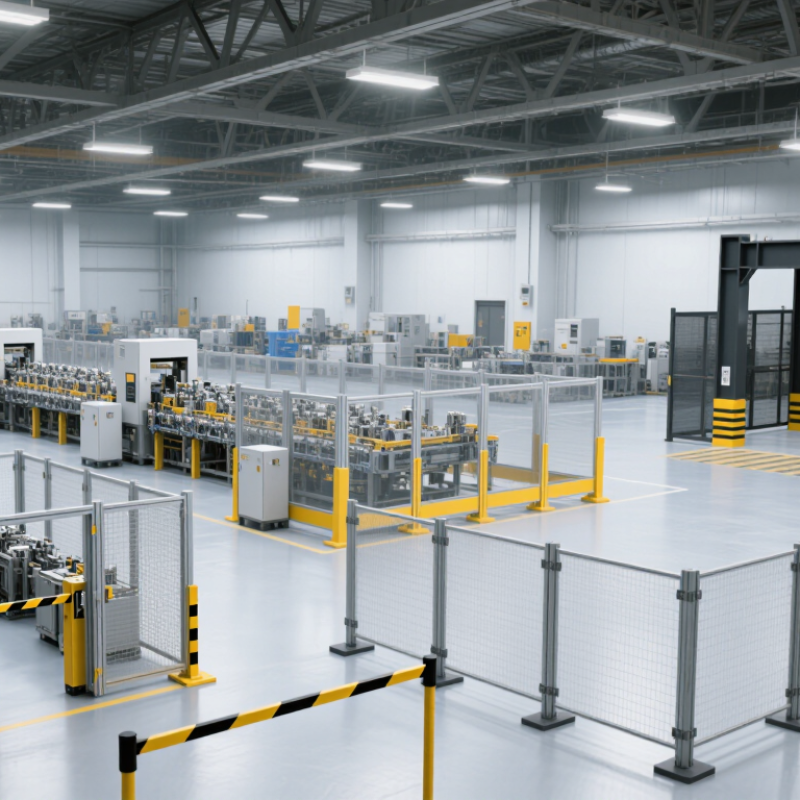
2026 Top Machine Safety Fence Types Which Is Best?

What Is a Machine Safety Fence and Why Is It Important?

2026 Top Machine Safety Fence Types: Which Is Best?

What Is a Machine Safety Fence and Why Is It Important?

A machine safety fence is a physical barrier around moving equipment, robots, conveyors, or automated cells. It keeps hands, clothing, and tools outside dangerous zones. Typical systems use welded mesh panels, posts, access doors, and interlocking switches. Fixed fences suit stable layouts. Hinged or sliding fences support regular maintenance. Modular mesh fencing works well when production lines change.

The risk is not theoretical. The International Labour Organization reported about 2.93 million work-related deaths and 395 million non-fatal injuries worldwide each year. The U.S. Bureau of Labor Statistics recorded 5,283 fatal workplace injuries in 2023. These figures cover all industries, not only machinery. Still, they show why visible, engineered separation matters. A fence can block access to crushing points, rotating shafts, and unexpected robot movement.

Good protection begins with risk assessment, not panel selection. ISO 14120 requires guards to be suitably designed, constructed, and installed. An interlocked door should stop hazardous motion when opened. Clear mesh can improve visibility, but openings must prevent reach-through access. A rushed installation may leave gaps near the floor or conveyor transfer points. That is where real experience matters. A fence is not magic. Operators still need training, inspection, and controlled maintenance procedures. The best type depends on hazard distance, access frequency, line layout, and stopping time. Sometimes, the cheapest fence becomes the costliest mistake.

Main Types of Machine Safety Fences in 2026

2026 Top Machine Safety Fence Types: Which Is Best?

Main Types of Machine Safety Fences in 2026

Machine safety fences create a clear barrier around robots, presses, conveyors, and cutting equipment. The right type depends on impact risk, visibility, access frequency, and cleaning needs. A risk assessment should guide every selection, not a catalogue image.

Welded wire mesh remains a practical choice for many production areas. Its steel panels resist daily contact and provide clear visibility through small openings. Modular mesh systems also allow quick changes when machines or layouts move. Technicians can inspect moving parts without entering the guarded zone. However, poorly aligned panels may leave gaps near floors, corners, or transfer points. That detail is easy to miss.

Solid steel panels suit areas with sparks, chips, dust, or stronger impact hazards. They offer better containment but reduce visibility and airflow. Transparent polycarbonate panels provide a useful middle ground. Operators can watch the process while receiving protection from fragments and splashes. Scratched panels need replacement.

For temporary work cells, lightweight modular barriers can simplify installation and maintenance. Retractable barriers may help around loading points, but they require careful positioning and reliable locking. Gates should include suitable interlocking devices, and emergency access must remain obvious. In real inspections, the weakest point is often the gate, not the fence. Check anchoring, panel height, reach distances, warning labels, and routine inspection records against applicable local requirements. A fence that looks strong may still fail if workers can reach around it.

How Different Safety Fence Types Compare

2026 Top Machine Safety Fence Types: Which Is Best?

How Different Safety Fence Types Compare

Machine safety fences are not interchangeable. The right type depends on impact risk, visibility, cleaning needs, and operator access. Welded wire mesh remains practical for many automated cells. Its rigid panels resist routine contact, allow airflow, and provide clear visibility around moving equipment. Small mesh openings also help limit reach-through access. However, mesh can collect dust and may be harder to clean in wet production areas.

Solid steel panels offer stronger separation and better protection from sparks, chips, or fluid spray. They suit harsh environments, but they reduce visibility and can make inspection slower. Polycarbonate panels provide a clearer view and a smoother surface. They are useful where operators need constant visual access. Yet they can scratch, discolor, or fail under unsuitable heat and impact conditions. Transparency is not always safer.

Aluminum profile systems with mesh or clear infill are flexible for changing layouts. Maintenance teams can replace individual sections instead of rebuilding the entire barrier. That saves downtime, although lighter structures may require careful anchoring and impact review. Sliding doors save floor space, while hinged doors can offer faster emergency access. Interlocks, safe distances, gate alignment, and floor fixing deserve equal attention. A fence that looks strong may still have a poor gap or weak latch. Inspect the installation after vibration, cleaning, and equipment changes.

No option wins every test.

Key Factors for Choosing the Best Machine Safety Fence

Choosing the best machine safety fence in 2026 starts with the hazard, not the appearance. Welded mesh offers strong impact resistance and clear visibility around moving equipment. Polycarbonate panels suit areas needing dust control or greater visual separation. Modular steel panels allow easier changes when production layouts shift. Each type has limits. A rigid fence may protect well but complicate maintenance access.

Measure the machine’s stopping distance, reach-through risk, and required service space before selecting panel height or mesh openings. Doors should support controlled access and connect with suitable safety devices. Check anchor strength, floor condition, corrosion exposure, and cleaning routines. A fence that looks solid can still fail if its posts loosen or its gate is regularly left open. Use documented risk assessments and applicable safety standards to guide the final design.

Tips: Keep visibility high near loading points. Use contrasting floor markings around access gates. Inspect fasteners, hinges, and panels on a scheduled basis. Ask operators where bypasses might occur; their practical feedback often reveals weak points. Avoid choosing the cheapest option without comparing installation and maintenance costs. Even experienced teams can overlook awkward tool access. Recheck the design after production changes, because yesterday’s safe layout may not fit tomorrow’s process.

2026 Top Machine Safety Fence Types: Which Is Best? — Key Factors for Choosing the Best Machine Safety Fence

Fence Type Typical Construction Visibility Impact Resistance Ventilation and Light Installation and Modification Maintenance Relative Cost Best Use
Welded Wire Mesh Welded steel wire panels mounted in posts, frames, and access doors. High High High Fast to install; panels can usually be rearranged or extended. Low; inspect welds, posts, fasteners, and surface coating periodically. Low to Medium General machine guarding, robotic cells, and production lines.
Expanded Metal Mesh One-piece steel sheet that is slit and stretched into a rigid diamond-pattern mesh. Medium to High High Medium to High Moderate installation effort; cutting and field changes are less convenient than modular panels. Low; check edges, fasteners, corrosion protection, and frame alignment. Medium Heavy-duty areas where rigidity and resistance to abuse are priorities.
Perforated Sheet Metal Rigid metal sheets manufactured with regularly spaced round, square, or slotted openings. Low to Medium High Medium Requires accurate measurement; rigid panels provide a clean, fixed enclosure. Low; inspect panel deformation, fasteners, and corrosion protection. Medium to High Applications requiring a more solid barrier, controlled access, or reduced flying debris.
Polycarbonate Safety Panels Transparent impact-resistant panels fixed in metal frames or modular posts. Very High High Medium Moderate installation effort; panels may require careful handling to avoid scratching. Medium; clean with compatible non-abrasive materials and inspect for cracking or clouding. High Processes needing clear observation, contamination control, or protection from fragments.
Solid Steel Panel Continuous steel sheets installed in framed sections with guarded doors or access panels. Low Very High Low More labor-intensive; ventilation, visibility, and access must be designed separately. Low to Medium; inspect coating, hinges, latches, and panel condition. Medium to High High-energy hazards, spark containment, restricted visibility, or strong physical separation.
Aluminum Modular Profile and Panel System Lightweight extruded profiles combined with mesh, clear panels, or solid infill. High Medium to High High Highly adaptable; easy to assemble, relocate, and integrate with access doors. Low; inspect profile joints, connectors, panels, and door hardware. Medium to High Frequently changing layouts, laboratory equipment, automated cells, and compact guarding.
Flexible Strip Curtain or Impact Curtain Overlapping flexible strips or impact-resistant curtains suspended from a support rail. Medium Low to Medium High Very quick to install and modify; requires suitable support and controlled access design. Medium to High; strips can wear, tear, discolor, or become contaminated. Low to Medium Material transfer points, splash control, dust reduction, and areas needing frequent passage.

Selection should be based on the machine's hazard assessment, required safety distance, access frequency, visibility needs, emergency access, and applicable local machinery-safety requirements. Ratings are general engineering comparisons; the final design must be validated for the specific machine and hazard.

Installation, Compliance, and Maintenance Requirements

In 2026, the best machine safety fence is not simply the strongest option. It must match the machine, access frequency, and risk assessment. Welded mesh supports visibility and airflow, while solid panels control sparks, dust, or fragments. Modular systems can reduce installation time, but poorly aligned posts create dangerous gaps.

The U.S. Bureau of Labor Statistics recorded 5,283 fatal workplace injuries in 2023, including 738 involving contact with objects and equipment. That figure reinforces why barrier design deserves engineering attention.

Installation should follow the machinery manufacturer’s risk assessment and applicable requirements.

In the United States, OSHA 29 CFR 1910.212 requires guards that prevent people from entering danger zones. ISO 14120 addresses guard construction, while ISO 13857 helps determine safe distances from hazardous movement. Interlocked access doors should also prevent machine operation when opened. Local rules may differ. Do not treat one checklist as universal.

Maintenance starts before commissioning.

Measure the clearance again after anchoring, because floors are rarely perfectly level. Inspect mesh, fasteners, hinges, interlocks, and warning labels during scheduled checks. HSE reported 561,000 non-fatal workplace injuries in Great Britain during 2023/24, showing how routine failures can remain costly. Dust can hide damaged anchors. A missing bolt may seem minor. It is not. Maintenance records should identify the inspector, date, defect, and corrective action. A yearly review may be insufficient for high-cycle production, although many facilities still rely on it.

We will help turn your vision into reality

Contact Us