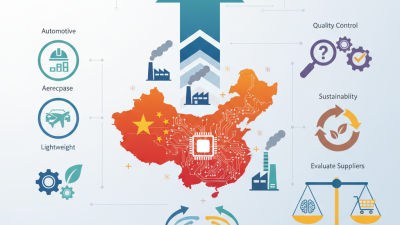
China’s plastic water tanks industry is expanding with urban construction, rural water access, and stricter storage expectations. The opportunity is substantial, but product quality varies sharply between suppliers.
The WHO/UNICEF Joint Monitoring Programme reported that 2.2 billion people lacked safely managed drinking water in 2022. The UN World Water Development Report 2024 also highlights rising pressure from climate change, population growth, and uneven water distribution. These conditions make durable plastic water tanks important for homes, farms, factories, and emergency reserves. IMARC Group’s water tank market analysis identifies infrastructure investment and water conservation as major growth drivers. However, market reports often combine steel, concrete, and plastic products. Their figures should not be treated as exact plastic water tanks sales data.
As water researcher Dr. Peter H. Gleick has observed, “Water is the lifeblood of the planet.” His words explain why tank selection deserves more than a price comparison. A reliable manufacturer should demonstrate food-contact material compliance, rotational-molding consistency, wall-thickness control, UV resistance, and practical after-sales support. Certification matters.
So does field experience.
This China Top 10 list compares manufacturers through product range, production capability, export experience, testing evidence, customization, and customer feedback. Factory scale alone does not prove reliability. A polished website can hide weak documentation. Some rankings may remain imperfect because private companies disclose limited financial and production data. That limitation deserves attention, not concealment. The strongest suppliers are those that show measurable quality, clear specifications, and dependable performance after installation.
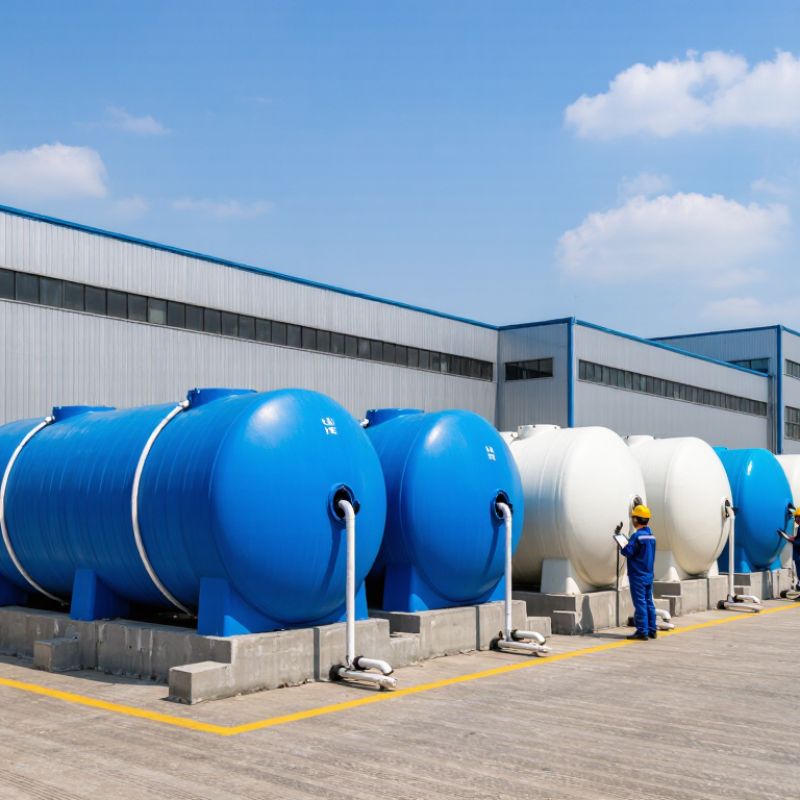
China’s plastic water tank manufacturing industry is best classified by material, structure, production method, and application. Common materials include rotational-molded polyethylene, polypropylene, fiberglass-reinforced plastic, and multi-layer composite plastics. Each material offers different resistance to sunlight, chemicals, impact, and temperature.
Structure also separates manufacturers. Some produce vertical tanks, horizontal tanks, underground units, cone-bottom tanks, and modular panel systems. Rotational molding suits seamless tanks with capacities from a few hundred liters to several thousand liters. Panel systems fit larger projects because sections can be transported and assembled on site. However, seams require careful inspection.
Application creates another practical classification. Manufacturers may serve agricultural irrigation, industrial processing, rainwater collection, construction sites, aquaculture, or potable-water storage. A serious supplier should provide wall-thickness data, raw-material details, load calculations, and batch inspection records. Factory audits should examine mold condition, resin storage, welding quality, and leak-testing procedures.
Not every large catalog shows strong engineering ability. This matters. A supplier focused on standard tanks may struggle with custom fittings or unusual installation spaces. Buyers should compare drawings, test reports, production experience, and after-sales response. Classification by factory capability is often more useful than classification by product count. The best evaluation combines technical documents with physical inspection and sample testing.
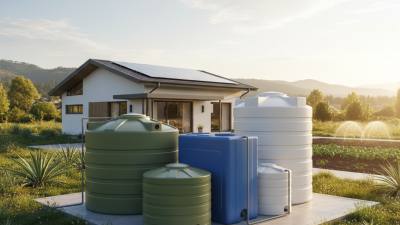
China Top 10 Plastic Water Tank Manufacturers?
Ranking China’s top plastic water tank manufacturers requires more than comparing factory prices. Material quality should lead the review. Look for food-grade polyethylene, stable UV resistance, and consistent wall thickness. Rotational molding should produce smooth interiors without weak seams or hidden bubbles. Independent test reports can support these claims.
Manufacturing experience also matters. A reliable supplier should show completed projects, production records, and clear quality-control procedures. Factory audits can reveal storage conditions, mold maintenance, and worker training. Certifications are useful, but they should match the tank’s intended application. Technical support, delivery accuracy, spare-part access, and warranty terms deserve equal attention. A low price may hide higher installation or replacement costs.
Tips: Request a sample, inspect its surface, and measure wall thickness at several points. Ask for batch traceability and written testing standards. Speak with recent customers when possible. Do not rank suppliers from catalogs alone.
A strong ranking should balance evidence, not advertising. It should consider capacity, customization, export experience, and response speed. However, no list is permanently perfect. Factory conditions change, and online information may become outdated. A careful buyer should verify current data before making a final decision.
This benchmark model evaluates manufacturers by the factors that most influence plastic water tank quality and purchasing decisions. Product safety, structural durability, quality control, and compliance receive the highest weighting, while customization, delivery capability, and after-sales support complete the assessment.
The percentages represent evaluation weights for a manufacturer-ranking framework, not company-specific performance data.
China’s top 10 plastic water tank manufacturers represent different strengths rather than one universal ranking. Several specialize in rotational molding, producing seamless tanks with consistent wall thickness. Others focus on sectional tanks for factories, farms, hotels, and municipal storage. Their product ranges often include polyethylene tanks, stainless steel-lined units, and customized chemical containers.
The strongest manufacturers usually provide material certificates, production records, and pressure or leak-testing reports. Experienced teams also discuss sunlight exposure, installation surfaces, water temperature, and cleaning access before recommending a tank. Some factories maintain automated molding lines, while smaller workshops rely more heavily on manual inspection. That difference matters. A polished website cannot replace factory evidence.
One profile may stand out for large-capacity agricultural tanks, while another may serve compact rooftop systems. A third may offer food-contact materials and traceable batches. Export-oriented producers often understand container loading and regional standards, but communication can still fail during customization. Measurements deserve careful review.
Tips: Ask for resin specifications, wall-thickness data, warranty terms, and recent project photos. Confirm whether fittings, ladders, and covers are included. Inspect sample welds or molded surfaces when possible. Do not judge quality from price alone; unusually cheap tanks may reduce material usage. Even a reliable supplier can make mistakes when drawings remain unclear.
China’s top 10 plastic water tank manufacturers should be compared beyond catalogue prices. The WHO/UNICEF Joint Monitoring Programme reported that 2.2 billion people lacked safely managed drinking water in 2022. That pressure increases demand for durable, hygienic storage systems.
Material choice matters. Most large tanks use food-contact-grade HDPE, valued for impact resistance and low corrosion. LLDPE can improve flexibility during rotational molding. Some suppliers use UV stabilizers, but performance depends on dosage and climate exposure. Rotational molding creates seamless tanks with fewer leak paths. Blow molding suits smaller, lighter containers. Injection molding is useful for fittings and precision components. The Plastics Industry Association identifies process control as a major quality factor, especially for wall uniformity and weld-free construction.
Production capability needs measurable evidence. A serious comparison should examine mold capacity, annual output, automated dosing, leak testing, dimensional inspection, and batch traceability. Factory laboratories should verify wall thickness, drop resistance, and migration safety through documented testing. OECD’s Global Plastics Outlook reported 353 million tonnes of plastic waste in 2019, so recyclability and take-back planning also deserve attention. Claims about “eco-friendly” tanks remain weak without material declarations. I would question any supplier reporting only maximum capacity. Real performance changes with sunlight, water temperature, installation, and cleaning frequency. Supplier rankings can also mislead when audited production data is unavailable.
| Rank | Anonymous Manufacturer Profile | Primary Product Portfolio | Common Tank Materials | Main Manufacturing Technologies | Typical Tank Capacity Range | Production Capability | Typical Wall Construction | Common Applications | Relevant Standards or Certifications | Customization Capability |
|---|---|---|---|---|---|---|---|---|---|---|
| 1 | Manufacturer Profile 01 | Vertical tanks Horizontal tanks Chemical storage tanks | Food-grade linear low-density polyethylene (LLDPE); high-density polyethylene (HDPE) for selected models | Rotational molding with computer-controlled heating and cooling | 300–50,000 L | Large-format molding cells; serial production for standard tanks; export-oriented packaging | One-piece seamless construction with reinforced ribs on larger models | Drinking-water storage, agriculture, rainwater harvesting, light industrial use | ISO 9001 quality systems; food-contact compliance may be available by project and market | Inlet and outlet positions, fittings, color, logo-free private-label production, and wall thickness |
| 2 | Manufacturer Profile 02 | Panel tanks Modular tanks Fire-water tanks | HDPE or polypropylene panels; stainless-steel accessories commonly used | Panel extrusion, CNC cutting, thermal welding, and modular assembly | 1,000–500,000 L | Project-based fabrication; suitable for large-volume installations and confined access sites | Bolted or welded modular panels with internal supports and external bracing | Commercial buildings, factories, fire-protection systems, municipal projects | ISO 9001; project specifications may reference local fire, plumbing, or construction codes | High customization of footprint, height, internal partitions, access openings, and pipework |
| 3 | Manufacturer Profile 03 | Underground tanks Septic tanks Grease traps | Rotational-molded LLDPE and HDPE with UV-stabilized grades | Rotational molding; integrated ribs and molded connection points | 500–20,000 L | Medium-to-large batch production; standardized molds for wastewater products | Double-wall or ribbed single-wall designs depending on burial depth and load requirements | Wastewater treatment, sewage collection, residential and commercial drainage | ISO 9001; applicable wastewater and installation requirements vary by destination country | Connection diameters, access covers, chamber configuration, and reinforcement options |
| 4 | Manufacturer Profile 04 | IBC-style tanks Transport tanks Liquid containers | HDPE inner tank with galvanized or powder-coated steel cage | Blow molding or extrusion blow molding for inner containers; steel-frame welding | 300–1,500 L per unit | High-volume standardized production with palletized shipment capability | Rigid inner container supported by an external metal cage and pallet base | Industrial liquids, water distribution, food ingredients, and non-hazardous chemicals | ISO 9001; UN certification applies only to qualified models and regulated contents | Valve types, pallet materials, label panels, closures, and discharge fittings |
| 5 | Manufacturer Profile 05 | Compact domestic tanks Attic tanks Insulated tanks | UV-stabilized LLDPE; foamed or double-layer polyethylene for selected insulated models | Rotational molding with multi-layer or foamed-wall options | 100–10,000 L | Flexible small- and medium-batch production with broad mold selection | Single-wall, double-wall, or insulated construction; molded handles on smaller units | Household water storage, rooftop systems, gardening, and small commercial sites | ISO 9001; potable-water suitability depends on resin, additives, and test documentation | Color matching, threaded ports, overflow assemblies, covers, and insulation thickness |
| 6 | Manufacturer Profile 06 | Industrial process tanks Mixing tanks Dosing tanks | Polypropylene (PP), HDPE, PVC, or PVDF selected according to chemical compatibility | Plastic-sheet fabrication, butt fusion, extrusion welding, and CNC machining | 100–100,000 L | Engineering-led fabrication with low-to-medium volume project production | Welded sheet construction with stiffening rings, frames, ladders, or support saddles | Water treatment, electroplating, chemical processing, and industrial wastewater | ISO 9001; material selection and design normally follow project-specific engineering requirements | Very high customization for agitators, sensors, flanges, coils, platforms, and internal baffles |
| 7 | Manufacturer Profile 07 | Agricultural tanks Fertilizer tanks Sprayer tanks | UV-stabilized HDPE or LLDPE; chemical-resistant grades for agricultural formulations | Rotational molding and blow molding for selected compact products | 50–20,000 L | Medium-to-high volume production with molds optimized for repeat agricultural models | Seamless molded body with anti-slosh baffles or molded mounting points where required | Irrigation, liquid fertilizer storage, pesticide dilution, and farm equipment | ISO 9001; chemical-resistance validation should be confirmed for each formulation | Mounting brackets, level indicators, suction points, drain fittings, and custom colors |
| 8 | Manufacturer Profile 08 | Rainwater tanks Garden tanks Slimline tanks | UV-stabilized LLDPE or recycled-content polyethylene for non-potable applications | Rotational molding using vertical, horizontal, and narrow-profile molds | 200–15,000 L | Standardized product families with efficient mold changeover for multiple shapes | Seamless single-wall construction with molded ribs or base reinforcement | Rainwater harvesting, landscaping, irrigation, and non-potable building services | ISO 9001; non-potable labeling and local rainwater regulations may apply | Profile dimensions, lid design, overflow kits, filter assemblies, and pipe connections |
| 9 | Manufacturer Profile 09 | Potable-water tanks Food-processing tanks Hygienic storage tanks | Virgin, food-contact-grade HDPE or LLDPE; stainless-steel fittings commonly specified | Rotational molding with controlled resin loading and smooth internal surfaces | 300–30,000 L | Quality-controlled production focused on resin traceability and inspection records | Seamless molded body with smooth interior and optional opaque, light-blocking outer layer | Drinking water, food ingredients, hospitality, and hygienic utility systems | ISO 9001; food-contact or potable-water documentation must be verified for the target market | Sanitary fittings, inspection ports, level sensors, cleaning access, and custom outlets |
| 10 | Manufacturer Profile 10 | Large water reservoirs Fire tanks Municipal storage | HDPE or PP panels; stainless steel, galvanized steel, or coated steel structural components | Thermal welding, extrusion welding, modular panel assembly, and on-site installation | 10,000–1,000,000 L or more, subject to engineering design | Custom project manufacturing with site measurement, logistics planning, and installation support | Reinforced modular panels with internal tie rods, external frames, liners, or insulation | Municipal water, fire reserves, industrial storage, and large commercial facilities | ISO 9001; fire and structural compliance depends on project design and jurisdiction | Full engineering customization, including dimensions, compartments, insulation, ladders, and manifolds |
Choosing a suitable Chinese plastic water tank manufacturer requires more than comparing catalogue prices. Start by checking the tank material, production method, and intended water use. For potable water, request evidence that the resin is suitable for contact with drinking water. Ask about UV stabilizers, wall thickness, impact resistance, and temperature performance. A 5,000-liter tank may look strong, but its base and fittings need equal attention.
Factory experience matters. Review production photos, quality-control procedures, and test records for leakage, thickness, and load resistance. A reliable manufacturer should explain how rotational molding is controlled, not only claim “high quality.” Request a sample or inspect an existing installation when possible. Check whether the factory can provide stable dimensions, replacement fittings, clear drawings, and consistent delivery times. These details become important when tanks must fit concrete platforms or narrow transport routes.
Communication is another practical test. Send the same technical questions to several suppliers and compare the precision of their replies. Vague answers deserve caution. I would also verify resin traceability, inspection records, export documents, and after-sales support before placing a large order. A low quotation can hide thinner walls or weaker accessories. That mistake is expensive. No factory audit is perfect, and my own judgment can be wrong, so use independent inspection for larger shipments. Look beyond polished brochures. Choose the manufacturer that explains limitations honestly and offers measurable evidence.